Driver slams through DTW Delta terminal
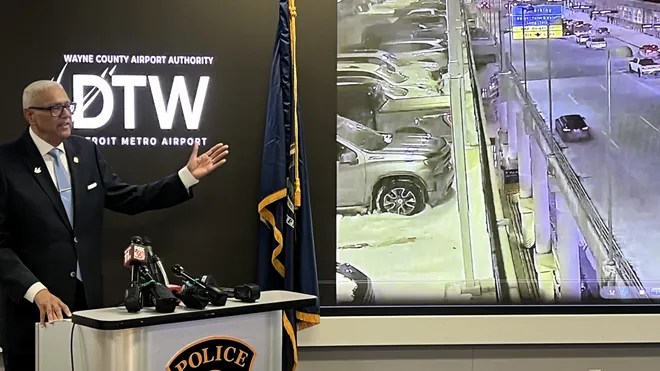
A scary scene shocked onlookers at Metro Airport’s McNamara Terminal on January 23, 2026 as a driver crashed his vehicle through one of the ticket counter entrances.
The Mercedes-Benz in question seemed to approach the terminal normally (left lane), but suddenly took a sharp right turn and crashed through the glass doors, coming to rest at one of the Delta Airlines ticket counters.
According to an airport spokesperson, the driver exited the vehicle and began rambling incoherently. “Not things a regular person would say… but gibberish.” Although the driver stated his name at the scene, the name was not released as of February 6, as the subject was undergoing a battery of mental health tests in an effort to determine a motive. The Wayne County Airport Authority indicated toxicology test results from the Michigan State Police were still being processed, and resulted in a delay with putting forth any appropriate charges.
Potential terrorism was almost immediately ruled out, per spokesperson Tadarial Sturdivant: “… as a result of us, working with our federal partners, of statements that we obtained from the driver, as well as making contact with family members, there was insufficient evidence to link this to any type of terrorism.”
Six injuries to bystanders inside the terminal were reported, but there were no deaths. Sturdivant hinted that proper safety protocol to prevent these incidents was woefully lacking. “We immediately launched a review of all of our safety systems from the top to the bottom,” he said.
As a temporary measure, the airport employed the use of “Jersey Barriers,” the 9000 lb. concrete sections, in an effort to quell any immediate danger, but more permanent installations would have to go through the airport’s engineering department for review, given the extra weight they would add to the curbside area.
Fortunately, operation delays at the terminal were minimal, and by the following day, traffic flow was normal and unaffected.
ICE facility springing from nowhere
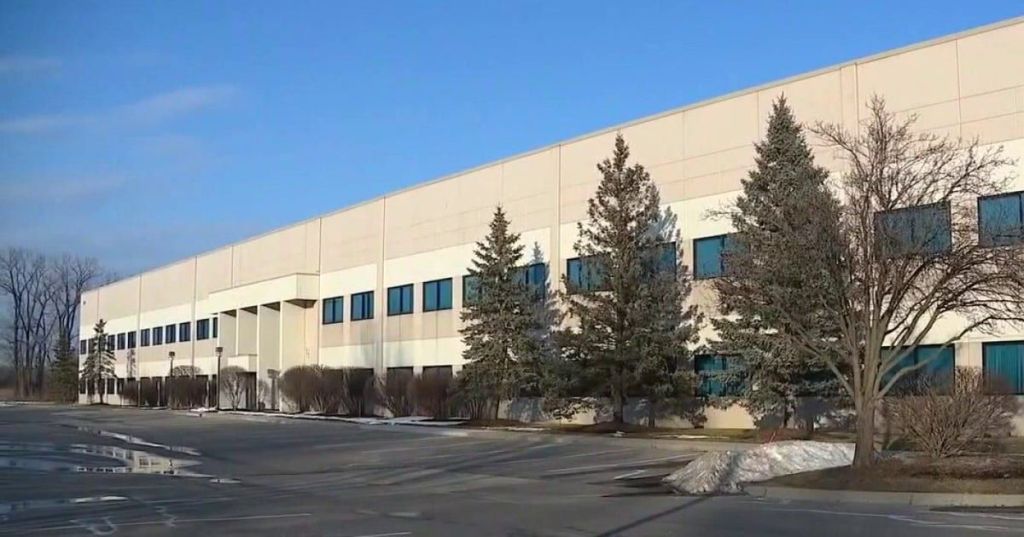
In an announcement that took everyone – residents and local leaders – by surprise, the Department of Homeland Security (DHS) announced in mid-February that they had secured purchase on a warehouse located near I-275 and Ecorse Road for use as a detention center for those facing deportation under President Donald Trump’s wide-sweeping protocol to address immigration issues.
Feedback and general communication with DHS was extremely vague. Romulus Mayor Robert McCraight and Michigan State Senator Darrin Camilleri expressed disappointment on being informed so abruptly. “There are a lot of concerned residents over there, not only a neighborhood, but a rural protected area,” McCraight stated.
Added Senator Camilleri: “It’s not shocking given the way ICE is operating nationwide. They don’t offer details, they don’t give explanations, they often operate in secret.”
The Romulus building purchase and proposed detention center location would be part of a nationwide crackdown on illegal aliens, which had been occurring with much negative press since late 2025; with the controversies in Minneapolis, MN still fresh on the public’s minds. DHS did state the proposed 500-bed facility could bring up to 1,400 new jobs and over $150 million in an economic boost, with an estimated $33 million going to the city’s tax coffers. This wasn’t enough to sway opinions.
Over the weekend of February 22-23, a peaceful group gathered outside Romulus City Hall to protest DHS’s move, but were met by a group of counter-protesters, with several small skirmishes resulting. The next day, Romulus City Council passed an unanimous resolution against the detention facility’s location. Residents and the general public literally pounded the doors to get into the meeting. One attendee suggested the building either be torn down or taken under eminent domain to prohibit the sale.
DTE, Zug Island industry violate Act
Also in February, the United States District Court, Eastern Michigan chapter, announced a fine of $100 million to be levied against DTE Energy for ignoring Clean Air Act protocols centering around Zug Island’s EES Coke facility. Harmful amounts of sulfur dioxide had been released in the air on a daily basis, to the tune of 3,200 tons back in 2018, when normal levels had been established at 2,100 tons yearly. The facility, which uses coal and other raw materials to produce metallurgical coke, had been in violation as far back as 2014.
DTE Energy and two of its subsidiaries are claimed to have ignored clean-air initiatives when they in fact had full control over EES in decision-making. By breaking the standard, the defendants in the case were able to save $70 million, which were later earmarked for other purposes.
 downriverhistory.blog