Trenton Power Plant comes down
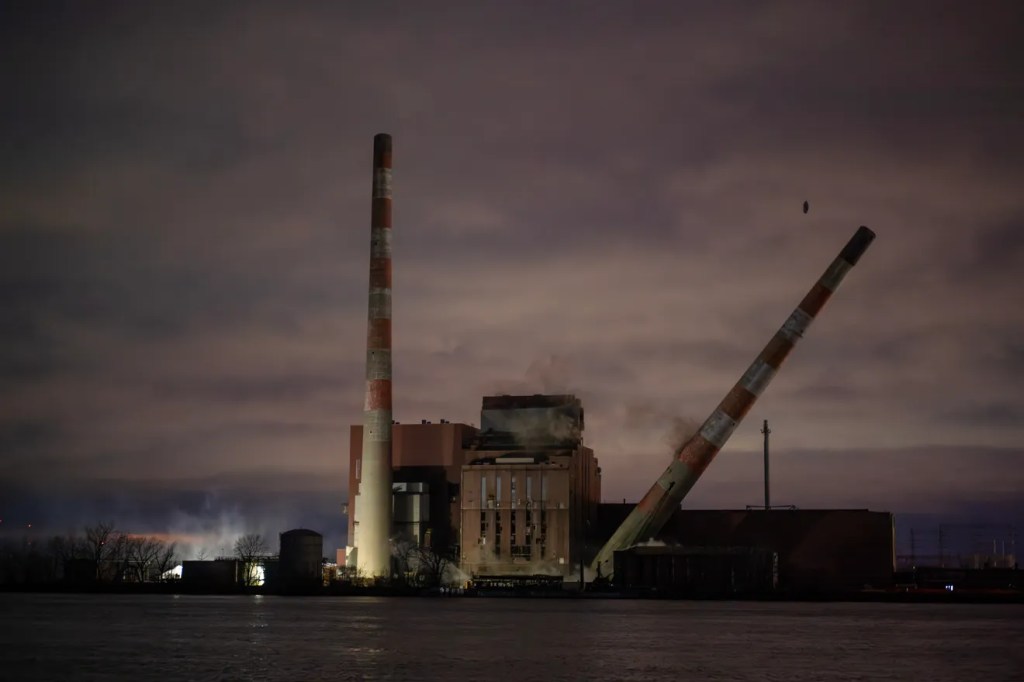
Early in the morning of March 15, 2024, despite a month-long delay, the twin smokestacks of the Trenton Power Plant were imploded on-site, as work continued in earnest of transforming the 100-year old facility and grounds into a cleaner, environmentally friendly energy source.
“It went exactly as we expected,” according to Michael Banks, the Director of Major Projects for DTE. “It was safely done. The stacks fell to the north as it was designed to do.”
The boiler house would be among the final structures on site to meet the wrecking ball, which would come later in June.
Immediately following the implosion of the candy-cane stacks, DTE announced preliminary future plans for the site. What would result was the scheduled late-2026 opening of the Trenton Channel Energy Center, a 220 megawatt battery energy storage system capable of storing 880 megawatt-hours of electricity, ideal enough to power roughly 40,000 homes.
Opened in 1924. the former DTE plant being razed was the first known power plant to use pulverized coal in its operations, and one of the first to utilize electrostatic precipitators for emissions control. The complex had been taken offline in 2022.
BASF cited by regulators to stop contamination
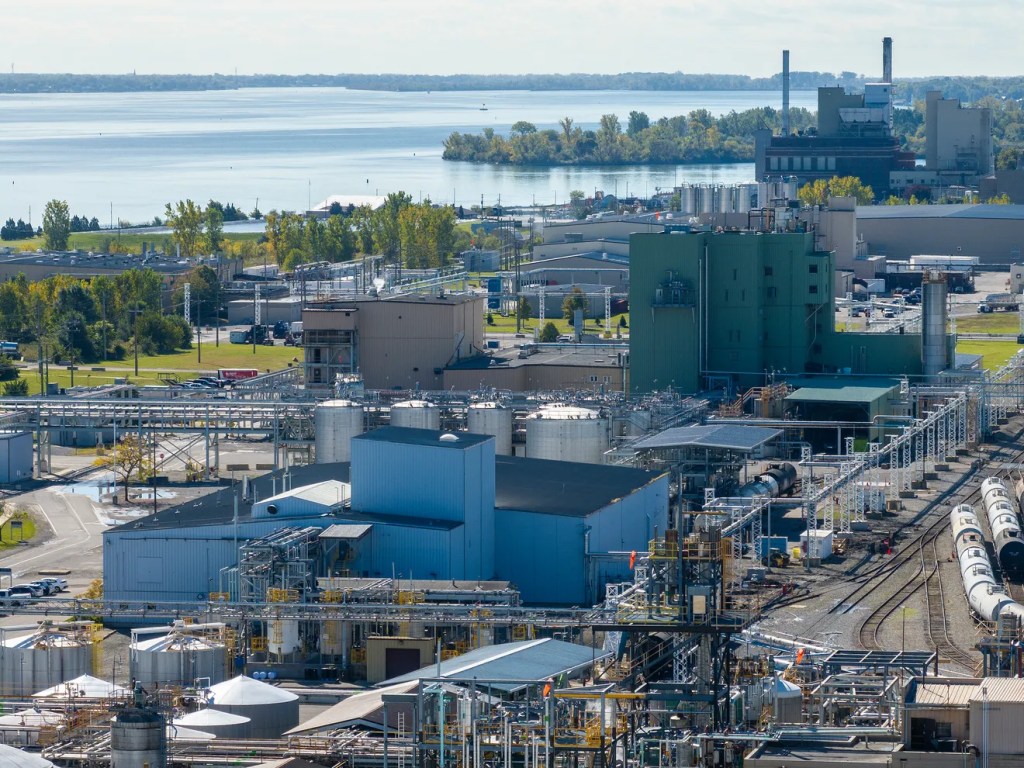
Despite controls having been in place since 1986 in attempts to prevent polluted groundwater from entering the Detroit River in the south side of Wyandotte, chemical manufacturer BASF received notice in April which indicated they were reneging in their responsibilities to provide the same service at the company’s north operations area, violating a 39-year old agreement in place.
The issue stemmed from extraction wells designed to pump contaminated water away from the river, which were only operating at 10-15% efficiency.
EGLE, Michigan’s environmental agency, wrote a letter to the company on March 10 to “take all necessary actions” to continue terms of the agreement. The ideal water flow into the extraction wells was deemed to be between 10-90 gallons of water per minute. In comparison, only a rate of 2 gallons per minute were observed by the agency in their findings.
Prefacing a March meeting to be hosted by the U.S. Environmental Protection Agency, it was also noted that soil samples taken at the North Works site showed pollutants including mercury, PFAS, PFOS and other volatile compounds. The site was located dangerously close to the main Wyandotte water intake.
BASF said in a statement that the area, which had stored various wastes in the former marshland since the 1880s, had “… no reason to believe that noncompliance exists, however, we are conducting a deep dive into the data.”
In an interesting sidebar, a potential whistleblower situation concerning negligence by EGLE in its efforts was brewing, according to Art Ostaszewski, himself an employee of EGLE. However, the Michigan Attorney General’s office were rather quick in dismissing this accusation despite the fact that Ostaszewski himself viewed paperwork and did research, dated from 2021, that pollution levels were high enough to kill aquatic life.
 downriverhistory.blog