Citizens help defeat Downriver International crossing
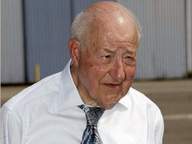
Ever since the idea of a second International Crossing that would span Detroit and Windsor was first discussed nearly a decade before, residents Downriver were worried one of the proposed sites would include a Downriver point of entry, as was suggested by the late Heinz Prechter a few years prior. In April 2005, Downriver was hit with not just one, but four potential sites for a new Bridge to Canada alongside proposals for structures near the Delray area.
Unlike the more recent chain of events, which had Ambassador Bridge owner Manuel “Matty” Moroun opposed to any secondary crossing, these crossings would have been built and managed by Moroun’s Bridge Company, which would therefore have a literal monopoly on border crossings. His biggest booster for a Downriver bridge came from River Rouge Mayor Greg Joseph, at least initially. The sites considered were at the east ends of either Southfield Road, Pennsylvania Road, or somewhere on West Jefferson Avenue.
The initial public hearing was held on April 11 at Wyandotte’s Biddle Hall, attracting an audience over 500. Wyandotte activist Richard Miller gained cheers from the group when he told the committee: “Why is (the bridge partnership) down here, when we already told you ‘no’?” Despite a bill being introduced in the house making all new potential border crossings publicly owned and subject to strict public oversight, the opposition would grow: a crowd of 1,200 would attend the next meeting at Crystal Gardens in Southgate. At that meeting, King Road was also brought up as a potential site. Activist Tom Burkhart began his campaign titled “Stop The Southern Corridor,” which generated more backlash against the proposals. In attendance, Wayne County Executive Robert Ficano announced, “All of us are in concert in opposition.”
River Rouge Mayor Joseph would later appear to modify his stance, saying that while Zug Island would be a good place for the bridge, he did not want the landing in River Rouge. The majority of those believed the JOBS tunnel in Detroit (an abandoned rail line) could be twinned to handle commercial truck traffic, even though bridge proponents argued it would not increase needed capacity.
By October, Downriver was officially taken off the list of sites, as Governor Jennifer Granholm officially struck all Downriver locales from the list of proposed sites. It would take nearly eight more years for the future Gordie Howe International Crossing to finally find its home, north of Delray.
Lawyer uncovers mass local injustice
For Alan Katz, a lawyer based in Southfield, the summer of 2005 was going routinely. As a lawyer specializing in debt collection and working alongside some of the area’s major medical firms – including Henry Ford Wyandotte Hospital – his job was to issue summons to each person who had back arrears in hospital or medical bills, ordering them to appear in court to prompt settlements in the matters. Generally, his job was to issue these summons and, when the people in question did not show to court on the appointed date, he would have area judges issue default judgments in Katz’s favor so he could proceed to garnish wages, property and vehicles to satisfy the debts.
When 25th District Court Judge David Bajorek was going over some of Katz’s paperwork in his district, he noticed something funny. The collected notes sent by Katz’s office were signed by the same process server (a designate of Katz’s), on the same day, at the same time of day. Since the affected people lived in several different areas, non-adjacent to each other, it was a physical impossibility for one process server to have accomplished such a task. In digging deeper, Bajorek uncovered hundreds of fraudulent documents produced by Katz’s office. These people were garnished or dispossessed without notice, without even a summons to appear in court to contest the charges. They did not even realize there were any accounts in arrears and no way of knowing they had been sued until their funds were taken. In one case, a woman was sued by Katz’s office for a debt of $3.62. By the time Katz was done with the dispatch, he attempted to collect $5,600 from the woman, owing to office charges, interest rates and other bogus line items.
When reported by the News-Herald in the summer of 2005, it made state-wide headlines and law-enforcement officials and related courts began re-examining the methods employed by collection lawyers. Bajorek was able to produce 311 counts of criminal contempt of court against Katz, and sought the suspension or removal of his law license. In September, Katz pleaded no contest to 136 counts and agreed to six months house arrest, plus a two-year suspension of his law license. Bajorek’s office announced that by the end of January 2006, every debtor affected in this case would have their money back. Katz would also be involved in cases with the State Court Administrator’s Office, the Attorney General’s Consumer Protection Unit, the Oakland County Courts, and the Michigan State Police.
Hazmat explosion forces evacuations
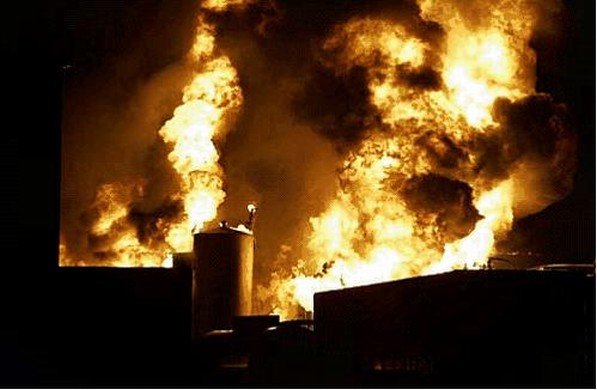
On August 9, 2005, HAZMAT teams would be called to a multi-alarm blaze at EQ Resource Recovery Plant in Romulus. A total of 32 people were taken to nearby area hospitals with breathing issues, but all were treated and released. There were no human casualties.
EQ Resource Recovery was best known for producing Acetone (an active ingredient found in nail polish remover).
An explosion at a parked tanker was likely the cause, although this was not the first time EQ had skirted trouble: They had been slapped with a $240,000 fine for various occurrences in 1999.
The eventual cause would be traced to a chemical reaction somewhere on-site.
Hurricane Katrina response heartening
Historically, the strike of Hurricane Katrina on the Gulf Coast on August 29, 2005 was unparalleled in its damage, passing even the effects Hurricane Camille had ravaged down south in 1969. It remains to this date the costliest natural disaster in the country’s history.
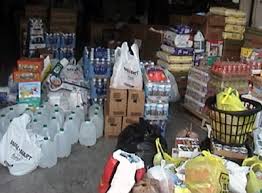
In much the same way as Downriver residents did during the Detroit Riots of a generation prior, many people volunteered to take on the tasks of assessing the damage and helping people in the immediate days following the hit.
Firefighters from various Downriver communities were dispatched to Louisiana to try and find survivors. A pair of Southgate Police officers worked closely with Louisiana officers searching buildings for the stranded and deceased. The city also sent a firefighter there as an emergency officer to aid the Federal Emergency Management Agency (FEMA) in their efforts. Wyandotte firefighters were sent down to Gulfport, MS in emergency operations, working to repair the area’s shattered communications system. And a total of 41 volunteers from the American Red Cross were mobilized, being sent to Baton Rouge, Louisiana. Gifts and donations were plentiful coming from all cities Downriver.
 downriverhistory.blog