Relief is promised for Southfield Road
Preliminary plans were announced in January 2008 which would finally reduce the cringing factor for motorists faced with driving Southfield Road in Lincoln Park and Allen Park. This stretch of roadway which resulted in many a vehicle spending time in alignment shops would finally be replaced with a modern concrete design, with an approximate start date in the Fall of 2009 at a cost of $3.7 million. A traffic survey conducted in 2006 estimated an average of 43,757 vehicles traversed this stretch of road daily. Allen Park would only be responsible for 8%, or $220,000, of the total project cost.
Major road re-design for Brownstown
Further relief was promised in a similar proposal further south which would re-design one of Downriver’s most dangerous intersections. At a public discourse held in February 2008, a total estimate of $16.7 million was given to this project which would modernize the Dix-Toledo / Telegraph / West Road area. The actual interchange area had been arranged in a semi-X pattern, with southbound Dix-Toledo traffic being forced to cross the northbound lanes of Telegraph at an angle, while merging onto Southbound Telegraph from the left. Traffic surveys taken from 1993-2001 revealed 628 individual accidents, comprising part of the 28% of Brownstown Township accidents which involved Telegraph Road. The project, named “Move Telegraph Forward” and in the eyes of planners and township officials since at least 1997, would result in a much safer, more basic T-intersection.
Metro Airport’s final phase results in jewel
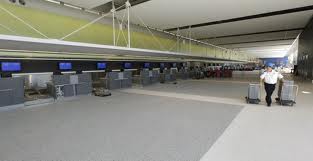
Wonderful news would finally reach air travelers weary of the dreadful aesthetics of the L.C. Smith Terminal, as the new North Terminal opened its doors in 2008. All airlines that were not affiliated with the Delta Airlines family would mark their location here, thus ending a nearly seven-year cycle of uncertainty.
When first opened in 1958, Smith Terminal was state-of-the-art. But numerous modifications deemed necessary by extra airlines and increased passenger traffic eventually took a toll on its look, as well as its user-friendliness. Restaurant choices, for example, were extremely limited due to the lack of available space. In a new glass and steel building, sharply toned in gray and blue, Metro Airport officially finished its 21st century reboot, and was now being ranked among travelers worldwide as one of the best airports in the United States.
 downriverhistory.blog