Water crisis reminds residents of Flint fiasco

Just after 2017 was rung in, concerns began to develop in the Downriver areas that were serviced by the Southwest Water Treatment Plant in Allen Park. Concerns began in the more southern communities, but would eventually envelop the entire region as the water was reported to be cloudy and had a sulfur smell to it. A total of 119 calls were logged in to the Great Lakes Water Authority (logo at left), which oversaw operations at the Southwest facility.
There was initially much confusion over how poor the quality of the water was, and concerns whether the water was safe enough to consume or whether a boil water alert would have to be issued, if indeed it had been. Gibraltar had reported that a boil advisory was a possibility. Opinions began circulating on various social media outlets in Riverview and Lincoln Park that an advisory had been issued. Some communities had noted turbidity in the water. All the while, the Water Authority was stressing that testing was continually being done on a more aggressive pace than usual and that the product was safe to use.
Many people were deeply concerned as to the possibility of lead contamination in the pipes, similar to what the community of Flint took much negative notice over the previous three years. Lead was immediately ruled out by the Authority as being a cause. Test after test resulted in no abnormality.
A routine cleaning in a sediment basin at the Southwest plant had been done, and resulted in the symptoms. The Authority announced all sediment basin cleanups would be indefinitely suspended until they could guarantee it could be done without the side effects. Still, concern about water quality would continue to linger even after the statement was made.
Mascot confusion hits Wyandotte
In March, State School Superintendent Brian Whitson announced his office was doing research into being able to fine individual school districts throughout the state for using what he believed to be insensitive, racially charged actions toward school mascots of Indian heritage. Locally, this would mean Huron High School, Woodhaven High and Roosevelt High School in Wyandotte.
Whitson determined judgments could result in the district forfeiting 5-10% of their state school aid fund. While he was looking at an official opinion from Attorney General Bill Schuette, Huron Principal Richard Naughton weighed in, saying the school honors and respects the sensitivity of such, having phased an Indian out of their logo over the prior twenty years in favor of an arrow. If forced to change, he said his district would do so with no problem.
Roosevelt High School had known about this for some time, and had done some preparatory work in time for an overseas band recital (the nickname question only applied to the band, not the sports team). The president of the Religious Americans Against Indian Nicknames and Logos, Harvey Gunderson, had officially logged in his protest a mere four weeks before the band was to depart over the prior Christmas break.
Band leadership initially offered to sew a blank patch over the Indian logo on all their uniforms. Two weeks before the trip, they changed direction and left for their destination with the uniforms intact, in a show of unity and pride. Siding with them were Chief Leonard Bearskin of the Wyandot Nation of Oklahoma, who saw no harm as he called in to WJR-AM’s Frank Beckmann show. At the same time, then-Superintendent of Wyandotte Schools, Patricia Cole, was on the other line. The logo itself had recently been redesigned in 2010 by Jamie Vandenberg, with inputs from Chief Bearskin and Steve Gronda.
State of Michigan finally secures McLouth
Citing a back tax bill of $3.7 million, Wayne County, after likely thinking about it for many years, officially seized Trenton’s McLouth Steel property from Detroit Steel Company, the firm running the site for much of the past twenty years. The grounds were due for review to determine possible re-use and redevelopment.
Trenton Mayor Kyle Stack initially doubted the city would end up placing a bid on the entire parcel, but vowed to keep all options on the table. The move happened with the support of the EPA, the Michigan Department of Environmental Quality, and Congresswoman Debbie Dingell. Also on the realm of possibility was getting the facility to meet the needs of the EPA for inclusion on their National Priorities List.
Masco headquarters sold to Ford
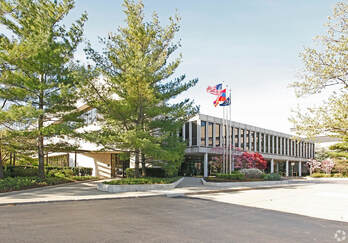
The end of 2016 brought what could have been a devastating move affecting Taylor: Masco Industries, a long-time business based on Van Born Road and one of the city’s largest taxpayers, decided to downsize their local operations and moved to a smaller location in Livonia.
When the move was announced, four suggestions were given for the property: sell, lease, donate to an educational institution, or level for parkland. As Mayor Sollars mentioned, “Naturally, you want to land on your feet in those type of situations… Anytime you land Ford, it’s a big win.”
Rouge River freeway changes patterns
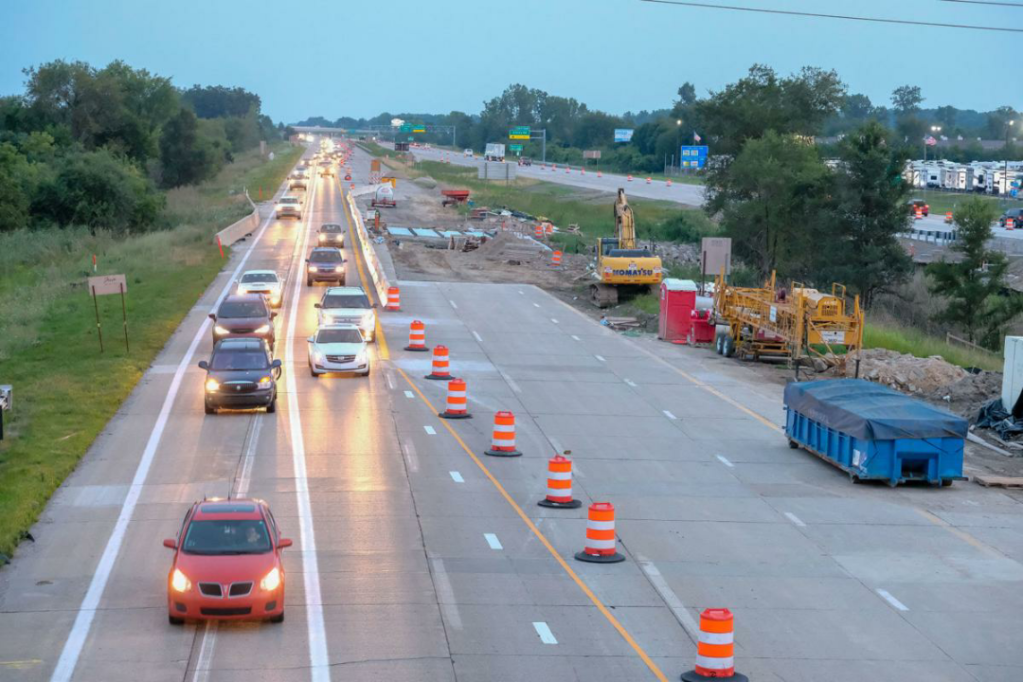
Freeway reconstruction and reconfiguration would be the name of the game Downriver starting in the early spring of 2017 and running until the end of 2018. The focus was on Interstate 75 from the Delray section southward to Sibley Road in Brownstown.
In addition to the complete reconstruction of the bridge decking on the Rouge River bridges, it was determined through a prior study that the Goddard Road bridges in Allen Park were out of code and needed replacement.
Work crews would spend the next two years demolishing the 50 year old bridges spanning Goddard Road, making the freeway more at grade level, and constructing two smaller bridges.
Rehabilitation work would commence on over two dozen viaducts along I-75, with most work concentrating on the Northline and Eureka Road overpasses.
As it would turn out, due to a worker lockout which occurred toward the end of 2018, the actual construction process would not complete until February, 2019. This would be the first major reconstruction project alongside this portion of freeway since 1989, when the stretch from Goddard Road southward to Sibley was completely reconstructed.
Another set of Taylor schools merge
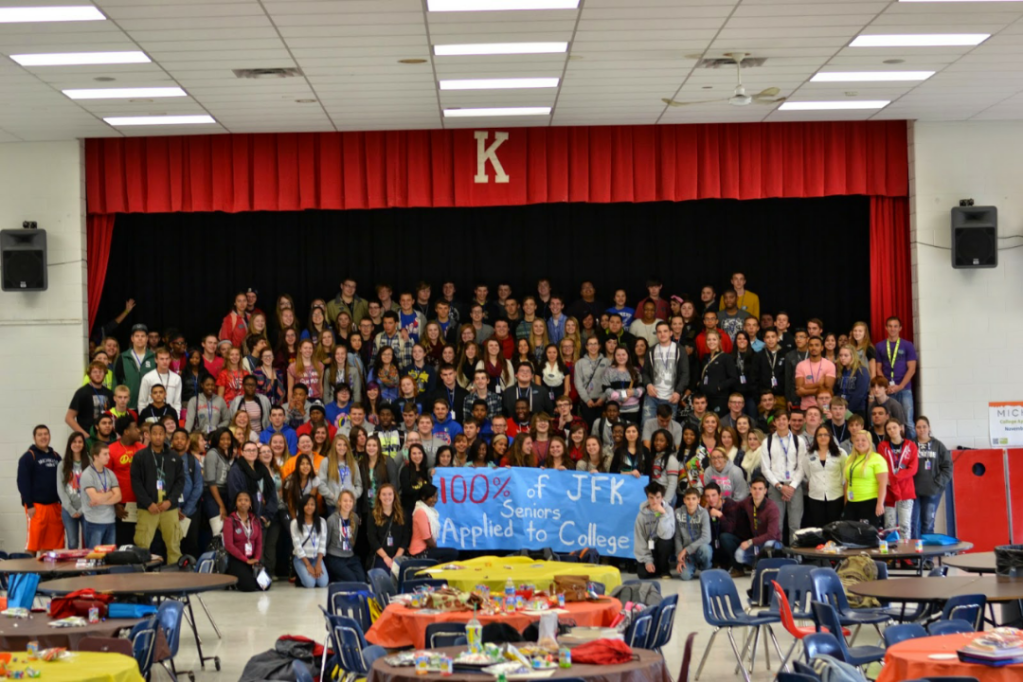
A little more than 20 years after Taylor Center High School closed, the same fate would befall Kennedy High School in a surprise move as a result of a board meeting held April 10, 2017.
Courtesy of a 4-3 vote, the issue of the closure was not on the agenda for that evening. This came only two weeks after the board had initially decided to save Kennedy and retain two high schools in the city. Trustee Donald Meyers, however, changed his earlier opinion on the matter, swaying the final verdict. Neither the trustees nor Superintendent Ben Williams were immediately available for comment.
In spite of the obvious positives that were touted by merging Kennedy and Truman High Schools together, parent outrage was felt around the district. Although Truman was more structurally sound and more capable of handling upwards of 2,000 students, they expressed dismay over the suddenness of the vote, while voicing concern that fewer students would be able to take part in extracurricular activities, including sports.
Kennedy High School would close for good in June, 2018, despite the fact that 1,000 students were still enrolled there as recently as 2017. The occasion was marked with three activities taking place over that weekend: a meet and greet on Friday, a final tour of the school campus on Saturday, and a pancake breakfast on Sunday.
With the merger having taken place, Truman High School was renamed Taylor High School.
 downriverhistory.blog