Patrick Henry MS undergoes growing pains
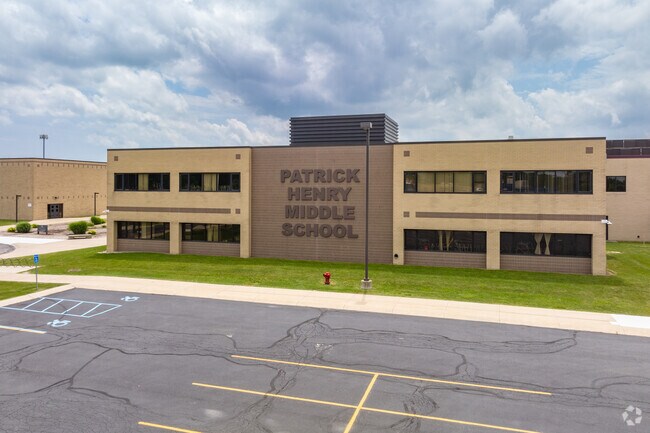
One of Woodhaven’s newer schools was opened by 1977 on Hall Road south of West Road. Patrick Henry Middle School was lauded at that time for being one of the most up-to-date buildings in any Downriver school district. The honeymoon would only last a few years, as by the late 1980s, the building faced possible closure and demolition due to serious structural defects.
On January 10, 1990, middle school students were to start a liberally different school day at Woodhaven High School, while Patrick Henry would shutter in an unanimous vote by the school board. High school students would be affected to a tremendous degree, as well. The ninth through 12th grades would now dismiss from the facility at 12:30 PM. Middle school students were now literally afternoon shift learners, beginning their day at 12:35 and concluding at 5:45 PM. Lunch periods which were originally 32 minutes in length were shortened to a 15-minute “nutrition snack break.” The school would no longer provide lunches, but would still supply free milk for the students. In spite of the lessened classroom time hours, it was decided not to extend the school year to compensate.
Upon further examination of Patrick Henry’s exterior and infrastructure, the news was worse than originally estimated. Testing of five panels of brick taken from the exterior showed extensive cracking, plus water penetration bleeding through to the interior drywall. Individual bricks and mortar were dislocated by as much as 3/4 of an inch, support beams were twisted, and vertical walls were leaning.
Bracing the walls was an option, but would cost the school district $500,000, while not being guaranteed as a long-term fix. Virtually all parents and other members of the district agreed the School Board did the right thing by shuttering Patrick Henry. Their main concern involved the strained schedule at the high school facility.
Parents argued that the former Brownstown Middle School on Inkster Road would not only alleviate overcrowding and peer pressure among the different age groups, but return school and bus schedules to normal. That school had been constructed in 1979, but had never been used as a school; it had spent much of its time occupied by the Army as a small training facility.
At that time, possible legal action against the original designers and contractors of Patrick Henry was being considered as an option.
Downriver’s “domes” less than imposing
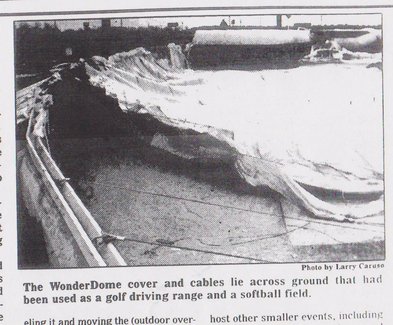
Less than two years after its delayed opening, the era of the Woodhaven WonderDome would come to a sudden close thanks to Mother Nature. A January 25 windstorm struck Downriver around 1:00 that afternoon and would last into the evening, with some wind gusts clocked at over 66 MPH. begin to give out three hours into the storm, with its outer skin ripping off at the north end starting around 5 PM.
Another notable dome recently built would also find its way into the news in the spring of 1990. Since announcing initial plans in the late 1980s, New Life Christian Church had been constructing a new church and school structure on the site of property they owned at Pennsylvania & Trenton Roads since the 1970s. The artist rendering of the project showed two domes surrounding a central building.
To this point, only one dome had been constructed: the school dome, which was temporarily serving as church quarters. This, however, was falling well short of required building codes, and the church group (whose new name was “Dome On The Rock”) was facing a possible jury trial, set for May 18.
Among the violations were zoning issues, accusations of the church tearing down stop-work orders posted by the city, and no working sprinkler system… all unfit for school use. The church pastor, C.L. Johnston, refuted all accusations, saying he was anxious to work with the city to ensure the complex’s completion. He also pointed to a $1.5 million loan promise from Texas-based Trust Company of America (for the construction) that had unexpectedly dried up.
Fort George & Jolly Roger close
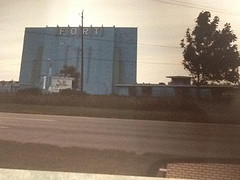
The year 1990 would also bring the official end of an era, as the last two drive-in holdouts – the Fort in Southgate and the Jolly Roger in Taylor – closed their doors. Much of the charm of the experience had diminished, as indoor movie houses were beginning to drastically improve their offerings with clearer pictures, crisper sound and (in a few short years) the debut of stadium seating, which would virtually eliminate sightline distractions. Combined with a lack of concern for weather conditions, plus a less rowdy crowd in general (indoor theaters were easily more patrolable), drive-ins would become a mere novelty of the past.
The closing of the Fort was initially attributed to a drop-off in business, though many local residents claimed a windstorm (perhaps the same one which destroyed the WonderDome) damaged the screen to the point where it was not considered wise to rehabilitate. Those still desiring the in-car movie experience would need to visit the Dearborn-based Ford-Wyoming Drive-In, still in business today.
Worst storm since 1980 Derecho strikes

A major rainstorm hit Downriver on September 6, 1990, and was called by many the worst storm of the past decade. This storm drastically affected southeastern Michigan.
A grand total of 50,000 residents in Wayne and Monroe Counties were without power, with approximately 10,000 lightning strikes and over four inches of rain in places.
Brownstown Township was one of the hardest hit, as the community reported twenty-five reports of downed wires, concentrating on an area of Telegraph between King and West Roads. Ecorse reported severe flooding underneath the railway viaducts on Outer Drive and Southfield Road. The loss of power shut down operations at the West Jefferson Treatment Plant in Detroit, forcing facilities to work harder.
Near Grosse Ile, 1.3 million gallons of partially-treated water was released into the Detroit River; the island community also had 50% of its residents without power.
A rain gauge set out by Riverview DPW Director Gerald Perry alleged six inches of rainfall in that community. Various residents in Romulus would go powerless for up to four days. Flooding was a concern in Trenton as 500 sandbags were ordered placed around the Frank & Poet drain to protect fifteen houses in the adjoining neighborhood. Wyandotte’s power supply interruptions, although limited to 30 minutes at a time, continued to occur in cycles through the night.
 downriverhistory.blog