WCCC struggles without millages
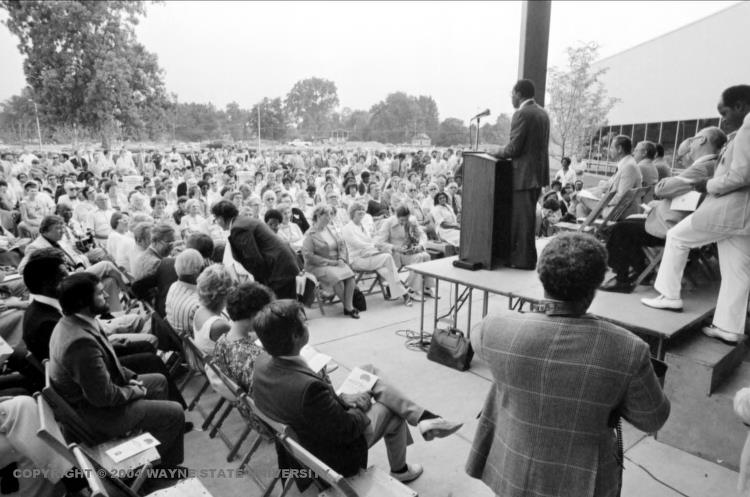
A 450-page report was released in January, 1991 detailing what could be done to help the struggling Wayne County Community College, ahead of a proposed 1992 millage vote. The need to retain campus services was made even more important since state officials planned to phase out an annual grant given to the college beginning in 1992, a value of ten million dollars.
The undertaking seemed enormous on the surface, especially after trustee Charles Paddock mentioned some of the recommendations contradicted each other due to the fact so many volunteers assisted retired accounting executive Lawrence Doss in compiling the list.
Although enrollment at WCCC had increased by a marginal amount at their Taylor Downriver campus, overall enrollment throughout the five satellite campuses in the Metro Detroit area were down 11,000 from an earlier peak of 24,000. A county-wide proposal in August,1990 had failed and was not actively campaigned for by board trustee Ed Clemente.
Sounding moot on the new millage for the college, which was led at the time by Dr. Rafael Cortada, Clemente stated the college was the only one in the state that did not receive revenue from property taxes for its general operating expenses. An idea had also been discussed involving Wayne State University about renting space at the college’s five campuses, but Clemente also said this was doubtful to bring in additional revenue.
Wyandotte experiments with median parking
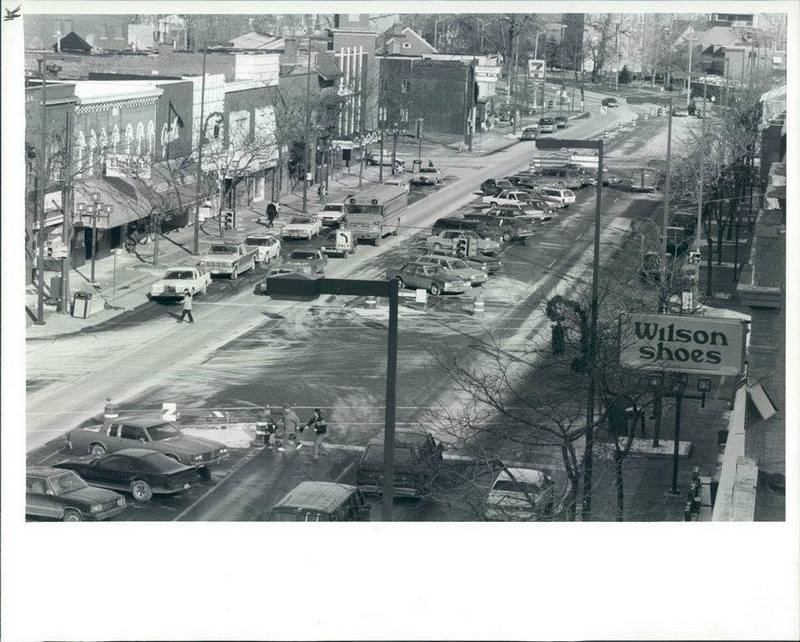
Despite the fact that an experimental program involving center median parking on Biddle Avenue in Wyandotte confused many drivers and may have caused additional congestion in the downtown area, many merchants in January, 1991 voiced that they wanted the center parking reinstated.
Wayne County saw the median experiment as just that, and had failed to renew the permit that allowed the parking in the middle of three lanes after October 1,1990, citing the inability or ineffectiveness of potential snow removal as a key cause for their non-renewal.
However, the co-owner of Cecilia Melody’s, Marilyn Radak, spoke up to say they could have done better with the additional parking the center median provided. A petition had been circulated early in the process to keep the parking from being implemented, and Radak attributed that to locals who would normally not shop downtown.
Idea introduces Wayne County split
Since Taylor had become a city in 1968, there had been no geographical changes Downriver from a map’s standpoint. However, two men thought the need to change that for the benefit of area residents who were quietly complaining about poor quality services provided by Wayne County. Their proposal would be to divide Wayne County into two counties; Erie County being the new one that would result.
The proposed county split, according to organizers Leonard Mannausa and Norman Chinavere, would “move (Downriver) communities from the shadow of Detroit,” and would help ease residents’ complaints that they were paying more in taxes than nearly everyone else — yet received fewer services in return.
The original proposal was sent to State Representative Vincent Porreca in May of 1991, with the request that the issue immediately be brought in front of the State House. To the frustration of Mannausa and Chinavere, Porreca announced the proposal out of “courtesy” only, and that he did not intend to sponsor it. The idea was not totally dead: it was referred to the Towns & Counties Committee. Roland Niederstat (D-Saginaw) officially KO’d the effort by saying the bill would go nowhere without input from Wayne County Executive Edward McNamara and the Wayne County Board of Commissioners.
Bob-Lo steamers end service to island
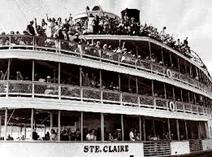
The end of an era occurred on Labor Day 1991, as the Bob-Lo boats Columbia and Ste. Claire were officially retired after 89 and 81 years, respectively. Attendance in the park had plummeted to under 300,000 for the first time in decades, nearly 60% lower than during its peak years.
From this point to its end, visitors to the park could only be ferried over from the Amherstburg boat dock, or people would need to drive over the border crossings to Canada.
 downriverhistory.blog