Riverview (Highlands) sees “20/20”
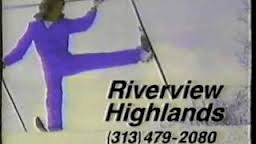
Waste had a different, cleaner connotation in Riverview, however, and it was because of such that the city would get its best national exposure to date in January 1992 thanks to the ABC-TV program “20-20,” which aired a special on Riverview Highlands and its metamorphosis to a ski hill facility & golf course.
The segment was titled, “The Town That Loves Garbage,” detailing the amount of revenue the hill was grossing, in addition to likening Riverview City Hall’s looks to the United Nations building in New York City.
Mail would come pouring in to City Hall; much of it complimentary, with many questions from as far as California asking how the city made the facility work. “We’re just doing our thing,” Mayor Peter Rottveel told the News-Herald. Due to the volume of calls, the city asked callers to write & mail in their questions instead.
The prior year, cable channel CNN had done a story on the facility; later in 1992 a production team from the Australian version of “60 Minutes” would stop in for a look and story, since such a landfill operation was illegal in Australia.
Talks resume on split to Erie County
On January 2, 1992, it was announced petitions had been sent to the Michigan State Board of Canvassers in an effort to restart talks toward a split of Wayne County into two. Led primarily by Leonard Mannausa this time, the original goals from May of 1991 were the same. A group called Patriots For Erie County were among the biggest boosters in an effort Mannausa said would succeed this time. “In the 84th County,” he said, “people will have representation for their taxes… a new government that will be for the people.”
But the possibilities faced a long, arduous climb. The law would need to be amended: specifically, the Michigan Boundary Adjustment Act of 1974. Only then could a petition see a valid chance of succeeding. A total of 205,166 valid signatures would be required within a 180-day period. From there would come signature validations from the Secretary of State. If that was passed, it would then go to the State Legislature for their decision.
Riverview vows to keep poker games alive
Poker players who were members of the Riverview Senior Citizens Club in the winter of 1992 continued to carry on their small-stakes games in spite of the fact that Wayne County Prosecutor John O’Hair ruled the games in violation of state criminal statutes on gambling. Referring to a prior Oakland County case, the prosecutor stated, “Since no exemption exists for such activity, I would indicate that you should inform your citizens accordingly.”
No less an authority than Riverview Mayor Pete Rotteveel declared the games would go on despite the higher ruling. “We’re not playing for money, but with money,” he stated. O’Hair’s edict was “just an opinion. We want facts.”
This particular occurrence took place through a paper trail originating from Riverview mayoral candidate William Jerden, in a letter to Police Chief David Couture. The chief initially stood by the prosecutor’s opinion, stating that it was the law.
Last physical evidence of Ford City demolished
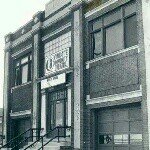
The decision was made in January 1992 to tear down the old Ford City building – 992 Biddle. It was done with some regret, but was deemed necessary due to possible structural fail. The demolition of this building would officially wipe out all real-time visual existence of the former Ford City (north Wyandotte’s old moniker).
Built in 1916 at a cost of $30,233, it served as the city’s firehouse, prison, municipal chambers and city offices. Upon Ford City’s annexation by Wyandotte, the building became a firehouse until 1970, when the Wyandotte Community Theater began renting from the city for $1 per year.
It was not in the budget to find $233,000 to bring the building up to code, so hopes for an art gallery & apartment complex had to be dashed. The building was on the Michigan Register of Historic Places, and the State would have to be informed of the city’s decision before demolition could take place.
The cornerstone of the building still stands – encased in brick – at the site on Biddle & Goddard.
Upgrades begin at Metro Airport
As part of a Master Plan strategy formulated in 1989, Detroit Metro Airport was well on its way to addressing the key concern and main complaint from nearby residents about the excessive noise made by the aircraft while taking off and landing. The original Master Plan assumed a 4.8% growth rate year-to-year, estimated total passengers peaking at over 22 million within the next 15 years.
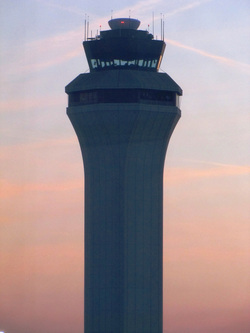
It was also at this time that new structures would begin to appear; notably the new control tower at the center of the airport grounds by 1991, which the FAA would begin using in 1992.
Despite the progress, residents had been even more concerned about the noise levels since southbound air traffic had been increased as part of a May 1991 plan by the FAA to study flight patterns at DTW.
This had been done to address earlier noise concerns poised by nearby Dearborn residents. Downriver residents in the affected areas would show up in high numbers to a series of public hearings throughout the year.
The organization People Limiting Aircraft Noise (PLAN) would eventually file suit against the FAA for the initial flight pattern changes which occurred in 1989, claiming the agency did not take environmental concerns to heart. Many aircraft engine tests had also been taking place outside of aircraft hangars, in areas which did not feature tall berms or other noise-altering equipment.
Finally, in November 1992, residents of Romulus and Huron Township received word that the county would invest $750 million in noise abatement, soundproofing, and property value guarantees for the affected residents.
While this was not guaranteed to completely solve the problem, the sale of bonds would be a start toward relief, although the possibility of a lawsuit – to be filed by primary air hub Northwest Airlines – appeared a possibility.
Wyandotte’s “Bag Tag” program debuts
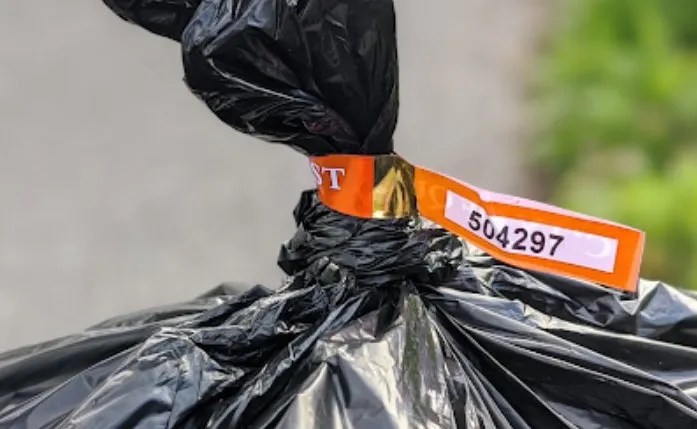
In perhaps Downriver’s first modern-day case of proving the axiom of “you get what you pay for” correct, Wyandotte would announce one year in advance that city residents would have to pay fees on their refuse in order to combat increased landfill costs at Riverview Highlands, which were slated to take effect later in 1992.
This proposed pilot program would be among a myriad of options given to residents to help defray the cost of processing waste. Estimating 52,000 cubic yards of waste, as tallied in 1991, the new rates would have increased that amount from $160,000 to $468,000 for disposal, as the city of Riverview proposed tripling the amount to $10 per cubic yard.
Given the fact that logistics shied away from finding another nearby landfill, it was strongly suggested by Wyandotte Solid Waste Committee chairperson Debbie Bloomfield that it was past time for residents to start changing their throw-out habits, suggesting an increased need for recycling or to purchase packages with more environmentally correct packaging. Adding to the general situation was the fact Wyandotte was at its millage limit for refuse collection and was coping with reduced state and frozen property taxes. Simply put, the money for Riverview’s increased rates weren’t in the budget.
Specifically included in the proposal was establishing a 32 gallon mixed waste fee which, when paid for, would be given to the consumer in the form of a bag tag. Also included were proposals for yard waste pickup fees, maintaining the voluntary recycling site at the DPS yard, create a curbside recycling subscription plan for those who could not go to the recycling site, and develop a regional household hazardous waste drop off site for more dangerous items.
 downriverhistory.blog