Sibley Quarry gets the all-clear
An inspection of the Sibley Quarry was carried out from February 22-24, 1994, to check on any leftover radioactive pollutants which may still have laid in the area. The result was favorable as the quarry, as well as an additional site in Trenton and two former sites in Detroit, were all clear of contaminants. This inspection was necessary due to the July 11, 1958 quarry explosion in which sodium ash (as part of a two-year testing project in conjunction with the Fermi I nuclear power plant) became airborne and struck residents and homes in the nearby area. Seven had been injured and over 40 reported problems with contamination that July.
Pony rides at Elizabeth Park hang in balance
Pony rides had been a staple at Wayne County’s Elizabeth Park for nearly 60 years but, in May of 1994, it was reported the attraction could permanently close due to the advanced deterioration of the barn and stable on the grounds. The attraction’s operators, Bob and Jane Luton, had 24 ponies, six carriages, six wagons and a goat which were utilized at the park. Supporters of the owners said that despite the apparent conditions, shutting down the pony rides was senseless. Relief would come a short time later by Deputy County Executive Mike Duggan, who declared that any foregoing issues regarding the property would be handled through future, appropriate agreements.
Pageant contestant “strikes out”

The Trenton Theater hosted the Mrs. Michigan-USA Pageant in 1994, which was won by Stacey Fielder, wife of then-Detroit Tiger slugger Cecil Fielder.
This was not without controversy, as three competing contestants would sue the pageant coordinators, claiming that, due to Mrs. Fielder’s celebrity status, the entire contest was thrown.
Those contestants, whose names were not given, were able to get a Municipal Judge to hear their case, but it would be thrown out, with the trio branded as “sore losers.”
Flat Rock Mayor under scrutiny
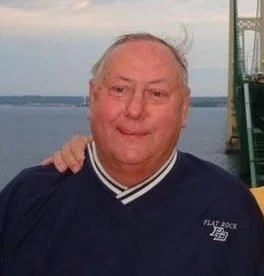
Richard Jones, who had been mayor of Flat Rock since the early 1990s, was facing a recall petition being circulated by city residents Martha Paquette and Alfred McEnhill. The petition garnered 743 signatures, which were validated by Wayne County, resulting in 690 final signatures. This was well above the 556 required to place the issue further into the process.
The recall attempt stemmed from an incident on July 21, 1994, which found Mayor Jones driving “while impaired,” and thereby “failing to faithfully represent and ignoring the safety and welfare of the people of Flat Rock.” The County Board of Elections would forward these signatures to City Clerk Thomas Burbo, Jr., who would then have 15 days to validate the signatures with the city’s registered voter list.
Marathon strike enters third month
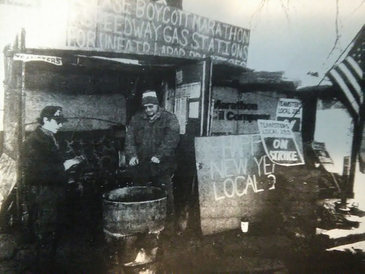
In November 1994, workers at the Marathon Petroleum refinery in Detroit / Melvindale went on strike to protest working conditions, which they claimed resulted in several near-miss accidents. According to the striking workers, many of these close calls were due to overwork from an updating program the facility had undergone since the summer. Many workers had to work upward of 45 to 60 consecutive days, with additional overtime included.
According to representatives from Teamsters Local 283 in Wyandotte, some of the duties performed by the workers under these conditions were unsafe by themselves. Company management would deny this, saying the facility had just completed its second consecutive accident-free year. Local 283 countered by saying that statistic was misleading, and that company supervisors would take injured workers to the site, whether they could work or not, in order to keep that claim valid. This was stated as the only reason for the strike’s ongoing condition; they were not concerned about wages.
Positions at Marathon were being filled on a temporary basis by management personnel from other refineries in Illinois, Louisiana and Texas. By January 1995, management and the local had met a total of 28 times since the start of the strike, but to this point, there was no resolution in sight.
Introducing the Super K-Mart concept

For nearly 30 years in its several Downriver locations, K-Mart did not change a great deal other than periodic, necessary building upgrades. Its first major rebranding came in 1990, as the long-time red & turquoise logo was retired in favor of a red “K” with a script “Mart” inside. The following year, a new super-store concept debuted in Medina, Ohio.
It would take four years before the Super K-Mart Center would make its Downriver debut, erecting a new building at the corner of Dix-Toledo and Emmons in Lincoln Park. It would open by late 1994 and represented the second time the chain attempted to combine grocery operations with their general hard-good business.
With the ushering in of a new style of K-Mart, the old guard was being phased out. In the same edition of the News-Herald that the “What is a Super K-Mart Center” ad (pictured above) ran, another half-page advertisement drew attention to the original two K-Mart stores Downriver: Melvindale and Southgate. The year 1995 would begin with these stores becoming “Clearance Centers,” advertising 75% off all merchandise (with the exception of house paints) in its final week. The last day of business for these two locations would be January 9, 1995.
 downriverhistory.blog