Injection well site is changed in Romulus
The drive to place a liquid waste injection well in the Downriver area appeared to be given up for dead at the start of 1995. Both the EPA and the Michigan DNR had given basic site approval for the well, which at the time was still locating near Northline & Wahrman Roads in Romulus.
However, preparations were halted when zoning ordinances were disobeyed. A general compromise could not be reached, so the matter would end up in the hands of Wayne County Circuit Judge Claudia House Morcom.
Her ruling placed the onus for the ultimate decision regarding the $6 million facility on the city’s Board of Zoning Appeals. In April 1995, the board ruled that Environmental Disposal Systems (EDS), the proposed operators of the site, could not have the Northline/Wahrman location, since it was not zoned properly.
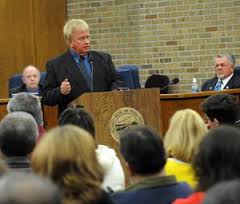
This came as a delight to members of the group Romulus Environmentalists Care About People (RECAP), and to the general public (including former Taylor Mayor Cameron Priebe, shown above), but their jubilation was short-lived. EDS would move its efforts to another site nearby, with revised plans including the burial of a 2,900 foot pipe to connect the processing center to the actual well. This was also voted down by the Romulus BZA. Once again, it looked as if the issue was laid to rest for the long term.
Closure of Taylor Center HS announced
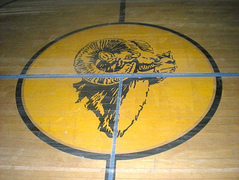
Meanwhile, citing under-enrollment, the Taylor Board Of Education voted to shut down Taylor Center High School at the close of the following school year (1996-97). Students would be dispersed between the other two high schools in the city: Kennedy and Truman.
Parents of Taylor Center students were incensed and put a petition forward to recall school board members. Wayne County would toss out the petition, however, claiming that it “lacked sufficient clarity.”
Parents of Taylor Center students weren’t the only incensed people Downriver by July of 1995. They would be joined by many others thanks to the immediate after-effects of a newspaper strike between the Detroit dailies. Violent acts were at a fortunate minimum, although extra police patrols were assigned to the newspaper distribution center on John A. Papalas Drive in Lincoln Park. In the first week of extra safeguards, the Lincoln Park police turned in a $7,500 overtime bill.
Trenton Grand Hotel, YWCA in trouble
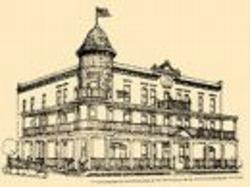
Time appeared to be running out for the owners of the recently-restored Trenton Grand Hotel, and it would close in July of 1995 as property taxes were not kept current.
The owners, C&P Inc., initially enjoyed success after the $1.8 million renovation and restoration to a Victorian theme in 1991.
The building ended up for sale when a planned conversion of the restaurant to a sports bar fell through. Co-owner Carl Pelino admitted he would be willing to “hang on” to ownership if he could find another business partner to manage that part of the facility.
It was also announced in July 1995 that the Downriver YWCA would be ceasing operations due to several quarters operating “in the red.”
While membership and monies were depleting quickly for the YWCA, the YMCA was seeing the reverse effect with increased membership numbers.
Overall operations would not be affected at the Wyandotte location, and the YMCA would pick up some of the former YWCA’s specialty programs.
Recreational offerings in danger?
The fall of 1995 would bring a reality check of sorts to recreational opportunities Downriver. In October, Riverview announced that ski operations at Riverview Highlands would cease. The hill had stayed open despite repeated recommendations by city officials that it was too much of a budget drain.
One alternative included closing down all operations for two years in order to extensively renovate. The less costly option would be the one chosen: a tubing and tobogganing operation, which would begin in the winter of 1996.
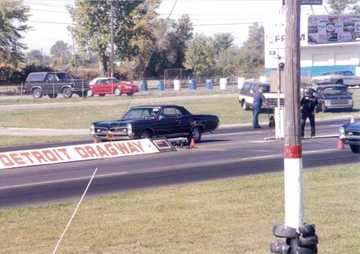
Also in October, property owners of the Detroit Dragway in Brownstown announced the entire parcel of 230 acres, plus surrounding lands, would be put up for sale. The propsects for a 1996 racing season were guaranteed; however the attempts to keep the facility functional beyond that did not materialize. Negotiations with the National Hotrod Association accomplished nothing, and the association added to the woes by attempting to bring third-party management as part of their plan. Residents of the newly constructed Crown Pointe Condominiums nearby were also complaining about noise. The new proposed uses for the property were of mixed use and distribution.
McLouth drifts; newspaper strike shows threat
Despite a clear vision by McLouth Steel management and a commitment to improvements across the board, the story continued to sour, as numbers for 1995 were not promising. The workforce had fallen to 1,200 union and 150 non-union. Assets were declared at $136 million, with liabilities noted as $360 million. The firm was therefore left with no choice but to file for Chapter 11 bankruptcy for the second time in twelve years in September 1995.
The Detroit News and Detroit Free Press newspaper strike kept going into the winter months of 1995, but Downriver was still being spared some of the uglier incidents. One notable exception came in December as the Southgate Police received report of six bombs possibly being held in that city’s distribution facility. Fortunately, a search revealed these to be “dummie” bombs to be used in a training exercise.
 downriverhistory.blog