Downriver gets more environmentally conscious

The new millenium, which clocked in without the expected computer glitches, power failures and general chaos, began with a gruesome discovery (and resulting clean-out) at the Hannah Court Trailer Park, located on the Ecorse/Lincoln Park border. A total of 22 trailers were moved out of the lot in the first phase of cleaning, leading authorities in many communities to take a second look at the condition of area mobile home parks, and to step up enforcement of maintenance wherever needed.
Meanwhile on Downriver’s west side, the liquid waste disposal permit for Birmingham-based Environmental Disposal Systems (EDS) was nearing its approval stage in March. The site on Citrin Drive had stood ready for several years for construction of a well and above-ground facilities (which would have a 20-year lifespan), but residential backlash (the last occurred in November of 1999 at Romulus High School) helped postpone plans time after time.
State Representative Ray Basham said he had contacted various firms that EDS would sign agreements with, and stated that none of those places had the amount of waste flow necessary to create such an operation in Romulus. Additionally, with that segment of the market competitive already, another facility was not deemed necessary. Douglas Wicklund, the president of EDS, was not phased, claiming his company had “a better mouse trap” than any competitior, and that residents hadn’t taken the time to learn exactly “what we are trying to do.” A total of $11 million for development had been contributed to that point by the Detroit Police & Fire Retirement System, but it was estimated $12 million more was needed.
Schaefer farm in Southgate ends operation
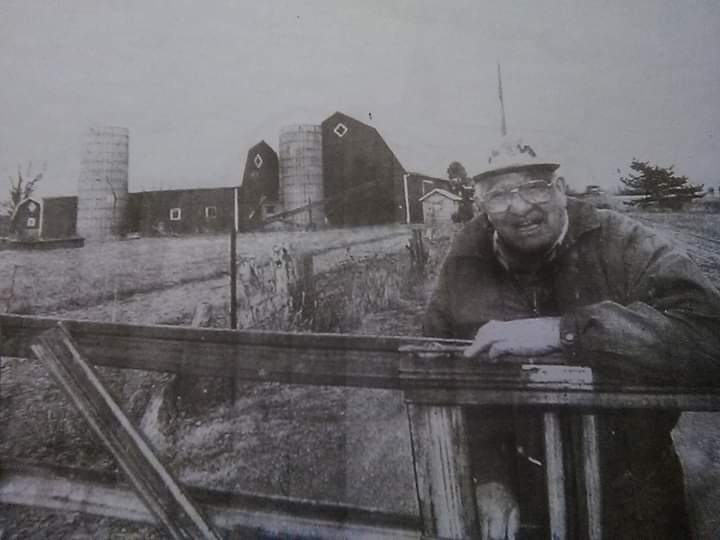
Downriver’s original “industry” showed definite signs of nearing an end. With only 6 1/2 acres of land to farm, and with the output being mostly hay bales, Mr. Lester Schaefer announced he would be selling his house, barn and supporting property, thereby ending operations at a complex which once encompassed the entire northwestern corner of Southgate. Mr. Schaefer and family were planning to move to new quarters in Carleton, and mentioned that while he would miss the farming life, the construction of I-75 through Southgate in 1966 virtually halved his property and damaged whatever possibility was there to maintain full operations.
Bob-Lo ownership in question again
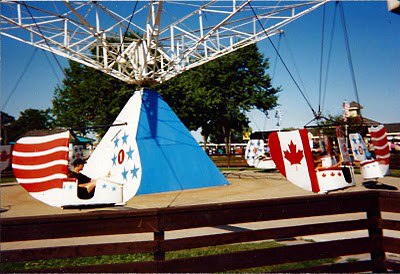
On May 1, 2000, the Canada Indian Claims Commission reported that Bob-Lo Island was never legally sold by the Walpole Island First Nation Indian tribe. The island had been deeded to them by King George III back in 1763, and it was asserted they never voluntarily gave up the land despite various acquisitions in the centuries following. As a result, the tribe claimed they never received fair compensation and were still entitled to the land rights, in spite of the fact a new housing development was already several years in progress.
This would void an aboriginal deed that had been in place since 1786 which in turn had depended on a 1763 Royal Proclamation that – as it seemed to turn out – was never validated.
The Canadian government claimed the current owner, John Oram, had clear title to the land since purchasing it from the prior Bob-Lo Amusement Park partnership in 1994; the Indian tribe chief Joseph Gilbert claimed otherwise. A trial on this took place which would last into 2003.
Aquinas High School closes
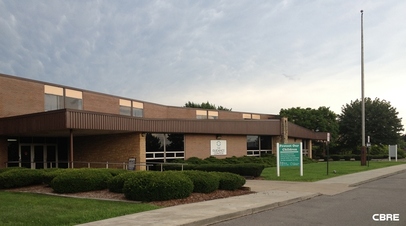
Just down Northline Road, Aquinas High School saw the last of its seniors graduate, as the institution would close its doors for the final time at the end of the 2000 school year. With total class sizes peaking at 800 in the 1970s, the entire student body comprised 83 students at the end.
A proposal six months earlier to combine the populations of Allen Park’s Cabrini High, Riverview’s Gabriel Richard High and Aquinas to form a new Downriver Catholic consortium (Cardinal Dearden High School) had failed.
The majority of the remaining underclassmen, as well as many of the staff, ended up at Cabrini High School, which pledged to keep some Aquinas traditions (such as their Academic Olympics) going
100-year rainfall brings deluge
A three-day stretch of heavy rainfall occurred in Downriver and Detroit from September 10th thru September 12th. The Metropolitan area tallied 5.73 inches of rain over that period, which today ranks as the fourth heaviest three-day rain total in Michigan history. It was termed a “100-year rainfall,” perhaps a way to signal a need for an official emergency declaration. In the midst of the worst of the storm, the local sewer systems malfunctioned, resulting in over 13,000 homes flooded by sewer system backups. It was later found that treatment plants in Detroit and Wyandotte were “run improperly,” though nothing specific was stated. Of these flooded homes, there were 34 potential class-action lawsuits filed against Wayne County.
This would be the first real test of new wastewater treatment requirement guidelines first written in 1977 and revised in 1987; both times due to prior lawsuits. The prior two cases were settled by consent judgements. The cases in 2000 were instead referred to the Federal level. Plaintiffs would cry foul over this, desiring the cases to be held locally. Their request was overturned at the county level as well as from the Sixth Circuit Court of Appeals, as it was ruled the Federal courts did have proper jurisdiction to the claims.
Petroleum Specialties saga concludes
By the end of 2000, the long-standing saga with Petroleum Specialties, Inc. (PSI) and its embattled owner Marvin Fleischman finally drew to a close. The December 28 edition of the Federal Register mentioned the Department of Justice and Fleischman agreeing to a consent decree, where the former business owner would owe a $6 million at-fault judgement, plus additional federal payments and fines. The majority of buildings and structures were leveled by this time, and contaminated dirt hauling from the site was completed.
 downriverhistory.blog