County-wide landfill targets Gibraltar mayor
Mayor Richard Kuhn would face a possible ouster from office as a January 7, 2003 recall date loomed closer. At issue was the city’s agreement with the County-Wide Landfill operation, which had been controversial for many years since its establishment in the 1950s. Kuhn had reaffirmed an earlier verbal agreement between the city and landfill which virtually approved an aggressive expansion program, which would result in more money for the city coffers.
Mayoral supporters indicated voters knew of Kuhn’s stance on the landfill, and elected him over landfill (and mayoral) opponent Kathy LaPointe in the prior election.
Kuhn had made earlier efforts to halt the recall attempt via restraining order, indicating that residents had mistakenly signed what they thought was a landfill petition, when it had in fact been the recall petition. His request was denied on December 26, 2002, but the upcoming election would not dampen Kuhn’s spirits. Indeed, with the votes cast, Kuhn would retain his mayoral seat with a 530-396 favorable tally.
Great Northeastern Blackout, part 2
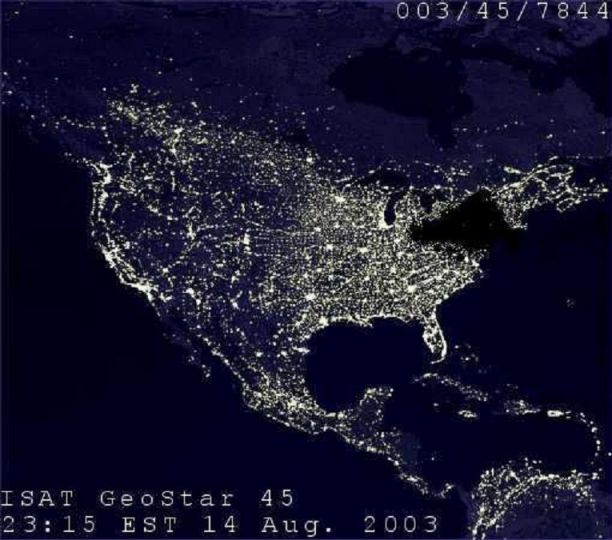
Michigan had been spared what had been the country’s worst-ever blackout in November 1965, but luck would not strike twice on August 14, 2003, as parts of the Downriver area would be buried in darkness for the longest time since the “Derecho” Green Storm of July 16, 1980. This incident remains the ninth largest blackout in world history when the amount of affected people are taken into account; nationwide nearly ten million experienced a loss of power.
To this day, the actual cause of this second Northeastern Blackout is not immediately clear, although we know the incident did not begin in Michigan, and fault was mainly placed on FirstEnergy of Ohio for a possible software bug.
The Downriver area was among the first to be affected around 4:10 PM on August 14. Marathon’s refinery on the Melvindale border was shuttered and a one square-mile area was evacuated due to a small explosion caused by trapped gasses. No injuries were reported.
No contaminants would be released into the air or find their way into the sanitary sewer system, but that system would not have been able to handle any release regardless: without power, sewage could not be treated, and found its way into residential basements. WDIV (Channel 4) had previously warned these affected residents to move valuables to the highest level of their homes, as some areas were in fact experiencing negative water pressure. A mandatory boil-water alert was placed into effect until August 18. Everyone would receive their power back by the 16th.
The root cause of the outage still involved several factors, but chief among them was a tree in Ohio sagging onto power lines, which short-circuited and would have resulted in necessary shutdowns of the local power grid, provided the software controlling the FirstEnergy alarm was working properly. One ramification of the blackout was a new set of guidelines to be followed by power companies regarding routine tree-trimming projects; these would be accelerated in overgrown areas.
Despite these precautions, Downriver and the rest of the country would continue to voice concerns about the aging of the local power grid and what could be done to avoid future mass outages. To this date, wind power has been mentioned but has not been widely attempted here, perhaps owing to space limitations. Wyandotte, which has their own power system, has been at the forefront of discussions utilizing solar and wind as future power sources.
 downriverhistory.blog