Telegraph/I-94 interchange gets upgrade
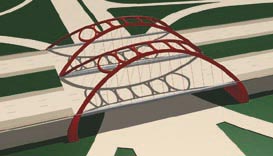
The Telegraph and I-94 interchange in Taylor, long neglected and in serious danger, would finally get a needed upgrade in 2004 with the construction of the present interchange. The two spans make up the “Gateway to Detroit” bridge as part of Michigan’s first Single-Point Urban Interchange (SPUI), which takes advantage of smaller areas to move large quantities of traffic more effectively.
A redesign was needed for quite some time. The Telegraph and Ecorse Road exits were back-to-back, left-hand entrance and left-hand exit interchanges, which were considered extremely hazardous (the Ecorse Road exit on I-94 has been resurfaced, but still has ingress/egress to the left due to lack of space).
While critics did agree that the 1950s-style interchange was considered dangerous with elevated traffic levels, this new type of bridge did not sit well with them either. Telegraph traffic flow would rely simply on pavement markings. There would be no raised or ridged areas designating an “out-of-bounds” anywhere underneath the double span. These critics thought lane markings were not enough to prevent weaving, wayward traffic and increased accidents. The general unfamiliarity of the bridge design was also cited as being a disadvantage to area residents who would need to grasp the configurations quickly.
A similar set of critics would chime in, saying the coincidental timing of downtown Detroit’s upcoming All-Star Game at Comerica Park, plus the next Super Bowl at Ford Field, were the sole purposes for the construction of this particular design, and it was in fact part of the reason: people coming east from Metro Airport would have something aesthetic to look at. Despite all the negative vibes generated, including the project being tabbed the “Big Blue Blunder,” safety would come first and construction would commence on schedule.
CN Railroad sues Rockwood over waste transport
In the fall of 2004, Rockwood issued a stop-order to Canadian National (CN) Railroad’s waste-hauling operations, specifically targeting waste hauled in from New Jersey. Rail cars would come to the firm’s transload station on Huron River Drive near Streicher Road, offload waste into haulers, and drive away to Allied-Waste Rockwood landfill, located in Newport.
Fearing impact to the environment, Rockwood Mayor Phillip Smalley ordered a cease of operations, which accompanied a request from Wayne County that CN Railroad obtain a soil erosion permit. CN would end up naming Rockwood in a lawsuit, claiming the Interstate Commerce Commission Termination Act of 1996 gave control over its actions to a federally-governed body; local and state governments could not presumably step in to affect operations, at the cost of straining a working relationship between the city and firm.
Both Rockwood and Wayne County showed genuine concern over what type of New Jersey-based waste was being brought in, with CN stating there was nothing hazardous to worry about. Videos shot of the operation showed waste being scattered along city roads, falling from the rear of the trucks and generating many complaints to police.
 downriverhistory.blog