Gilead Baptist files for bankruptcy
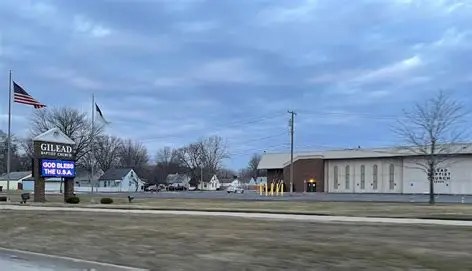
Bankruptcies appeared to continue scattering around Downriver, but perhaps no outsider would have thought a church would have been among them. Indeed, in November 1988, Gilead Baptist Church in Taylor filed for Chapter 11 protection, bringing to life a very difficult situation involving two ministers and their congregation.
In a situation somewhat likened to a scandal yet to bring down Jim Bakker and his PTL television empire, the leadership of Gilead had begun over-reaching in their goals. Initially located where the Allen Park City Hall currently is, Gilead had recently found new church grounds on Telegraph in Taylor with ample room for expansion. Eventually the church, under the leadership of Rev. J. Thomas Downs, would purchase acreage in Florida to build a mobile home park, built a high-rise nursing home south of the church, and purchased a nearby motel in the hopes of wiping out prostitution and other “sinner” activities taking place there.
For these projects, mortgage notes were issued to Gilead, who put their church assets up as collateral. However, due to one circumstance or another, the majority of these plans fell through and would prove costly. Defaults began and lawsuits were filed to begin recouping money. Rev. J. Thomas Downs would be accused of wreckless financial dealings, chief among them was asking his congregation for monetary donations, knowing full well the resulting transactions would be risky. Nearly two dozen church members would leave the membership as a result.
Bob-Lo steamer incident weakens image
Memorial Day 1988 would prove to be a dark day for the future hopes of Bob-Lo Island. Attendance had steadily been declining since its peak of 800,000 annual visitors in the mid-1970s. Having changed hands two more times since Todd H. Browning first sold off the assets in 1979, a marketing error would prove to be nearly tragic, and would make the road to recovery for the amusement park extremely difficult to achieve.
Ticket packages were sold to two Detroit Public Schools, who had rival gang factions. The salespeople were not aware of this, and were criticized for their short-sightedness once events had occurred. After a routine boat ride to the island, it became rowdy throughout the morning and afternoon; fights involving knives and unconcealed firearms were commonplace. The Ontario Provincial Police would dispatch twenty officers to help restore order and prepare the returning boats for loading.
Once off the Bob-Lo dock, the fights would resume, concessions would be looted and boat equipment would be tossed overboard. Approaching the Detroit dock, the crowd rushed to jam the exits and stairways. Finding their path to the exits on the Ste. Claire blocked, its crowd would rush to the port side, nearly listing the boat over. Upon arrival to the park the following day, all the fencing at the dock was found ripped out, and had to be replaced. The resulting media coverage would end up dooming the prospects of the attraction.
Downriver becoming “Metro Shores”?
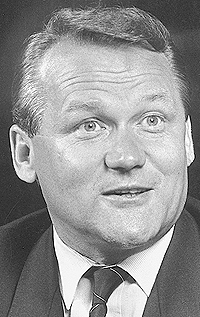
By then, a committee was formed in an effort to rebrand the Downriver area under the new, unpopular title of Metro Shores. “Vision 21” spokespeople insisted the area needed an image refresher away from the factories and industries of the past, and felt a name change would provide new insight into the area’s present and future, while eliminating supposed negativity.
None other than “Mr. Downriver” himself, Heinz Prechter, was akin to changing the name. “There is a ‘down’ connotation some have to Downriver,” Prechter would say, “(and) it’s a campaign to show we’re ‘up’ with Downriver.”
The area of Metro Shores would have encompassed a larger area. adding Belleville and Sumpter Township to the classification.
Looking to highlight east and west
In November 1988, several years of study came to an initial close at the Presidential Inn in Southgate. The meeting was presented by the Southern Wayne County Chamber of Commerce. Hosted by Robert Adams, the deputy director of transportation for M-DOT, it concerned the feasibility of constructing a new east-west route further south from I-94 to better serve central & southern Downriver.
But the overall news was not too good for supporters. Of seventeen possible sites identified for a major thorofare (which ideally would connect with I-275 to the west), four were labeled probable: Eureka, Pennsylvania, Sibley and West Roads. Adams stressed that the actual planning for a road of that stature could take up to five years, with construction taking another three. Ninety percent of the transportation budget was used for roads already in service, and no concrete plans were allowed for new projects critics might have labeled unnecessary.
“One of the things the government has to do is protect us from ourselves and itself,” Adams would state at the meeting. Other causes of delay were an exhaustive series of studies, and “red-tape” hurdles which were increasing in number. Yet, he ended the meeting with the message that the project was “ongoing, underway, and will be completed in an orderly fashion.” It would also be announced at the meeting that the possibility of a second Bridge to Canada construction project was looking bleaker – if it would even take place at all.
 downriverhistory.blog