“Duke of Downriver” has his initial moment
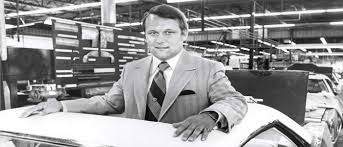
The newspaper quotation perhaps said it best in April 1984:
“Local government and business officials were abuzz in highly optimistic tones following the announcement that ASC (American Sunroof) and the DCC (Downriver Community Conference) have joined forces to promote a major commercial and industrial development along I-75 near Northline.”
With that announcement and meeting at the Presidential Inn, Heinz Prechter was officially introduced to the masses on his way to becoming Downriver’s greatest ambassador in history. Until then, Prechter had been content to operate ASC, having only purchased two automotive dealerships outside of his core operation. In the initial plan, 400 acres were to be developed into a high-profile office complex which would contain, as realtor Donald Treadwell said, “(a business) focal point.”
Korvette’s reprieve as flea market
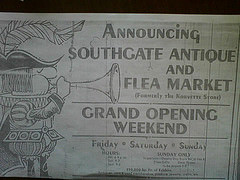
Four years had passed since its closure, but there was finally some signs of life in the old Korvette City shopping plaza in Southgate with the opening in 1984 of the Southgate Flea Market, taking up the main portion of the first floor.
To this date, there had been some talk about redeveloping the area; one idea involved the building of a new Downriver-based central Catholic High School, which may have combined Aquinas High School (Southgate), Gabriel Richard (Riverview) and Mt. Carmel (Wyandotte).
The flea market was expected to be a success and be the first major competition for Gibraltar Trade Center in Taylor. Within less than two years, the flea market would depart, leaving the aging building to the elements.
Protesters hit Fermi II, cheer torch relay
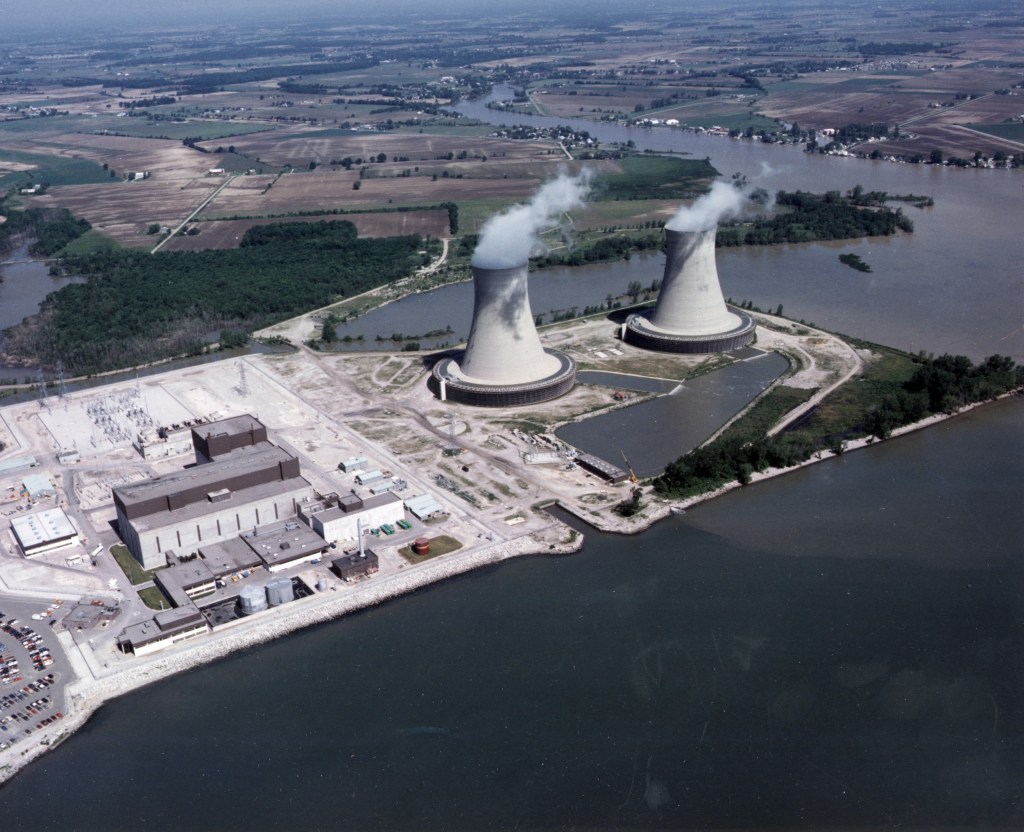
Under construction for several years south of Wayne County, representatives of the Fermi II nuclear power plant announced in May, 1984 that construction was nearly complete.
What would follow would be the first of many waves of public protests over nuclear power. It would still be nearly four years before a kilowatt would be produced, but the idea of nuclear power had taken a hit since the Three Mile Island disaster of 1979.
The Downriver area was the fortunate witness of the Olympic Flame which came through the area on its way to the Los Angeles Summer Olympics in 1984. The route began in New York on May 7 and was due to arrive in Los Angeles in time for the Games’ start on July 28. The May 21 route had the torch proceed from the city of Monroe north on Telegraph, then eastbound on West Road, and finally northbound on Fort Street toward Detroit.
Riverview Highlands, Sibley Quarry under fire
Now co-managed by Michigan Foundation Company as well as the Riverview and Trenton municipalities, Detroit Edison’s Sibley Quarry was facing increased public scrutiny over its blasting procedures being responsible for increased damage to homes and other nearby personal property. Various petitions had been circulated, and the effort landed a small victory for the residents: a $14,000 professional engineering study to identify the problem’s source and cite possible remedies. The study was due to be completed by May of 1984, but the ultimate solution would still be years in the making.
When the Riverview Landfill began initial operations in 1968, one of the original plans included the burning of methane gas at the site (the landfill formation itself would be the source of the gas). Despite efforts to get this back on track in 1984, they would once again fall short. The contract for extraction originally belonged to Watson Bio-Gas Systems; however, due to internal company problems, the contract was instead let to O’Brien Energy Systems from Pennsylvania. Representatives from O’Brien were determined not to cause further delays, but they would be forced to ask for an extension for startup in November 1984 as a result of McLouth Steel being hesitant to sign off on a customer deal without technical problems being addressed. Riverview was waiting for action, as a possible $13 million windfall could be realized over an ensuing 17-year period.
Meanwhile, police presence was beginning to become routine in Riverview’s east end neighborhoods, as a total of twenty-one burglaries east of Fort Street took place in less than a week’s time in October. Most of these occurred during the daylight hours, when most occupants were at work.
Pennwalt Plant suffers explosion
A gas explosion rocked the Pennwalt facilities on the border of Wyandotte and Trenton on December 21, 1984. Fortunately, no injuries were reported. The problem was traced to a malfunction in a fitting used to transfer hydrogen gas from one housing to another. A contractor for Wall-O’Donnell Gases was attempting to transfer contacts from one tank to another when the explosion occurred. Flames shot forty feet into the air in a blaze that two fire departments would battle for over two hours.
Mazda announces Flat Rock construction
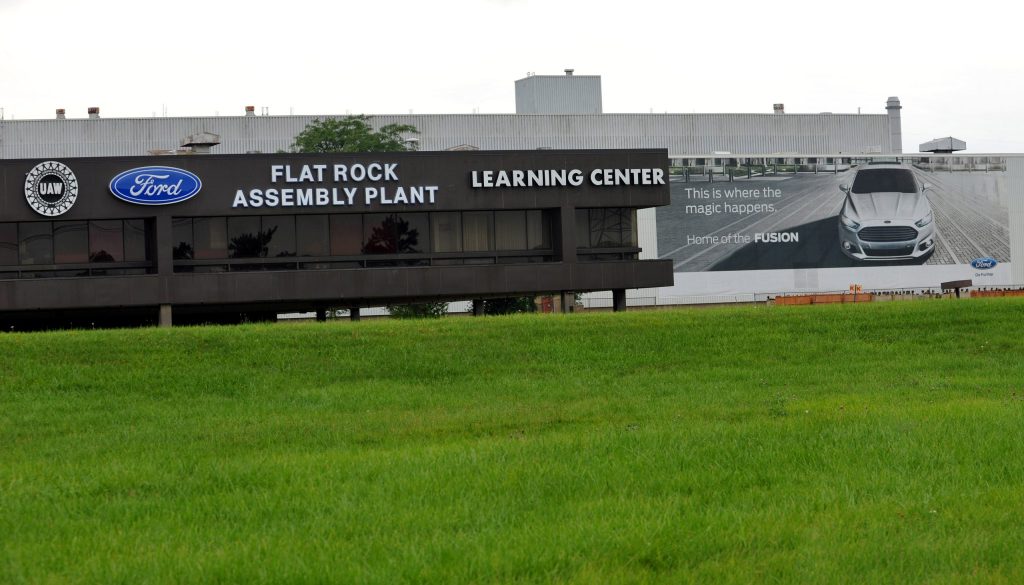
In December 1984, Mazda officially announced they would be building a new assembly plant just north of the old Michigan Casting Plant, along I-75 between Vreeland and Gibraltar Roads. The $450 million facility would begin construction in the spring of 1985 and represented the firm’s first production facility in the United States.
Flat Rock Mayor Ted Anders was enthused at the 3,500 job additions the facility would provide. The city would ultimately give Mazda a 12-year tax abatement to encourage the facility’s construction and operation.
 downriverhistory.blog