Let the Cable Television wars begin
In the spring of 1980, while Taylor City Council had originally awarded the franchise agreement to Wayne Cablevision and was awaiting final approval, another company took the opposing charge. United Cable, based in Colorado, would take out a full-page ad in the Detroit News and Free Press in March of 1980, imploring the city to renege on the agreement and open the matter for further discussion. Their ultimate goal was to strengthen the U.S. economy and ensure that as many cable providers as possible be American-based. Barry Gage, who was president of MacLean-Hunter’s cable division, was astounded “that a company would try to blackmail the Taylor City Council. It’s all sour grapes from a bad loser.”
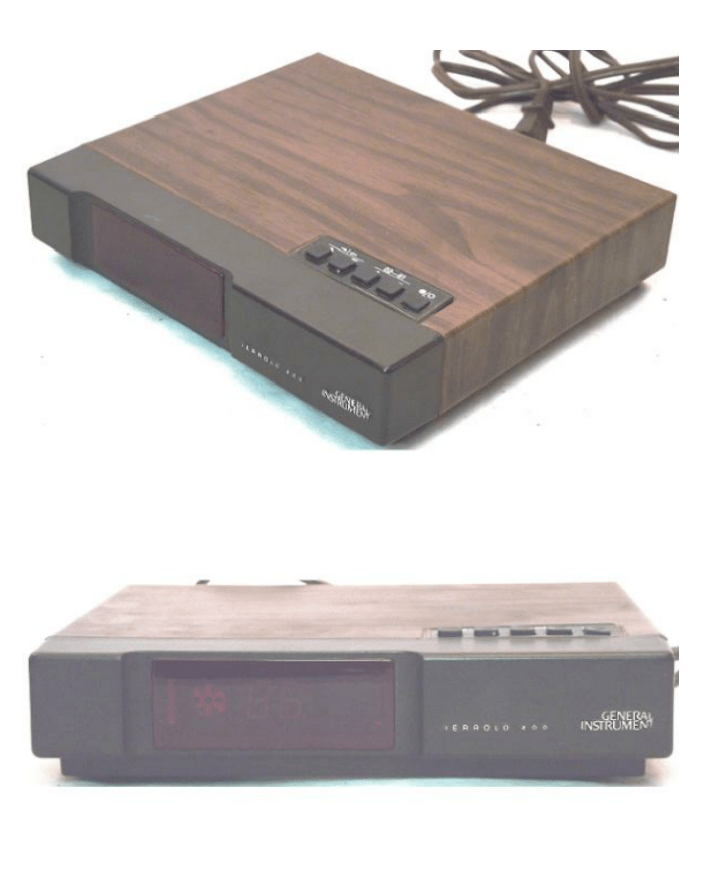
A sidenote here would be that two smaller, American-based companies were also in the running for the Taylor franchise agreement: Teleprompter and Metrovision, though they were not referred to by name in the original United Cable advertisement. Within the ad itself was a form that could be mailed into a Wyandotte post office box, identified only as “Buy American.” By this time, United had in fact scored the franchise agreement for Lincoln Park, but Vice President of Marketing Mark Van Loucks continued their aggressive push by stating, “This country is in a real pickle. Where else would the argument to buy American be more appropriate than in Detroit?”
Taylor Mayor Donald Zub implied that the matter was, for the most part, closed. “(United is) wrapping themselves in the flag. They are using any tool they can. But it’s not going to work. Our people are too smart for it.” A related matter involved city Attorney Donald DiBiasi’s reported 10% share in MacLean-Hunter possibly influencing the city’s decision to approve. He would also indicate that United was being vengeful of its loss.
Despite the overall road toward MacLean-Hunter’s final approval in the Downriver communities, United promised something unprecedented in its 27 year history: a door-to-door campaign, both by mail and in person, basically going over the heads of the city council. The $25,000 full page ad, they said, was just the beginning of what they promised to be a barrage of ads with no budget limitations, as well as letters to individuals, businesses, and union members. (Contributor: Matt Burb)
Downriver shows grit as 1980s commence
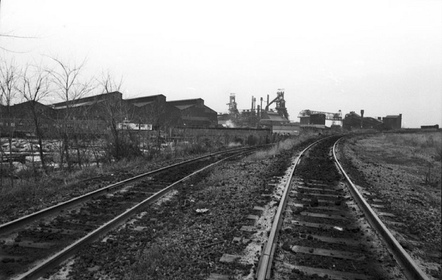
As the 1980s began, one of Downriver’s most important industries would show signs of trouble. McLouth Steel, successful for over 40 years in Metro Detroit, a staple in Trenton for 32 years and in Gibraltar for 26 years, began to suffer budget trouble. They had made adjustments in the latter half of the 1970s by reducing payroll and positions from their 1950s heights. Yet as the decade began, payroll remained at approximately 3,775.
It is relatively safe to assume that most of those people – and thousands of others – would witness one of the fiercest weather events to hit the area since the 1950s.
Derecho of 1980: “The Green Storm”
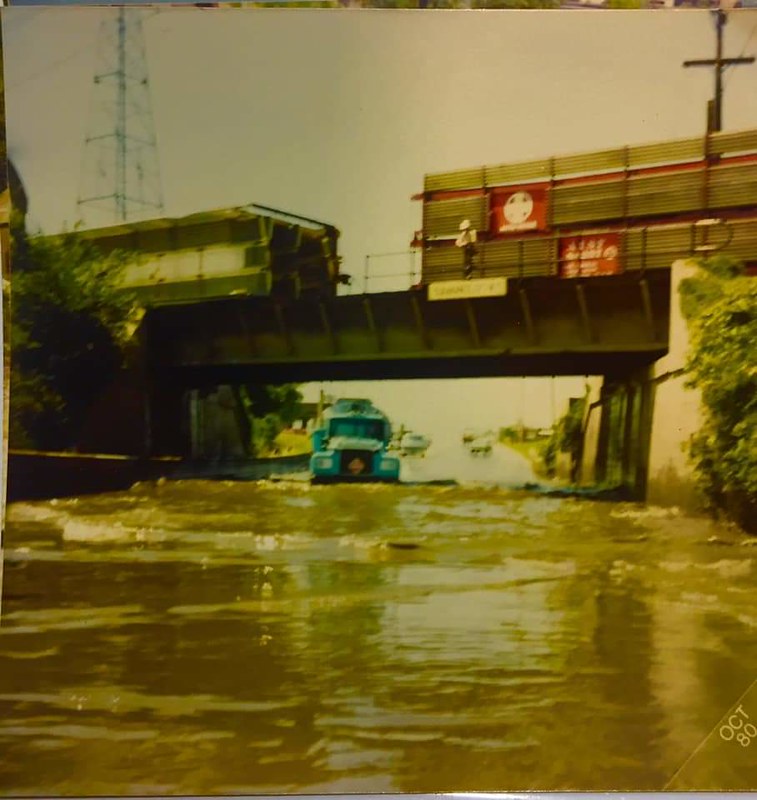
DERECHO (GREEN STORM) OF 1980
July 16, 1980 is a weather day that still lives in residents’ minds today. The day started out clear and dry, but by 8:00 AM the perception drastically changed. A weather phenomenon referred to as a Derecho began blowing in from Wisconsin, directly west to east.
Within minutes, the sky would turn a dark, pea-green color, followed by extreme gusts on wind (reaching 86 MPH at Detroit Metro Airport, but higher gusts at surrounding stations, some reaching triple-digits).
The storm sped east as quickly as it came, but some of the destruction was extraordinary. Interviewed on our Facebook site in 2014, witnessed concured they had never seen the sky as deep green as they had seen before or since.
The Arena section of Thunderbowl Lanes, which had hosted “Bowling For Dollars” as recently as the previous year, was heavily damaged as part of the roof caved in. Railroad boxcars were left scattered like toys on railroad tracks throughout Downriver. Most homes & businesses lost power for up to five days, as high-tension power pylons along I-75 were toppled from Southfield to Schaefer Roads (where the metal towers taper off to standard wooden poles show the proof). The screen literally went down at the venerable Ecorse Drive-In Theater, as the 1940s-era screen became a mangled piece of steel. Part of the facade of the Sears store in Lincoln was blown off.
Fortunately, no serious injuries were reported, and news coverage locally was not even front-page; it was more a summary with a few photos accompanying the article. Within a week, power was restored and any resulting cleanups began.
Cleanup, meanwhile, was the order of the day at McLouth Steel, as they were trying to eliminate the first signs of debt. In September, management went to the workers asking for their first concession: a one year wage freeze. The union force responded with a picket that would last three days, as the union and management inevitably would return to the drawing board.
E.J. Korvette liquidates operations
The drawing board, however, would be removed from the headquarters of E.J. Korvette that fall. Having slumped through flat sales, and two changes of ownership (of the land and business), it was announced that the Southgate store at Fort & Pennsylvania Roads would be shuttering after 17 years.
In competition and in step with the competing K-Mart on Eureka Road for many years, the store that astounded everyone at its opening with its sheer size and variety of items… the store which changed the course of discounting and store credit as residents had known it… would be confined to the history books, leaving Chatham Supermarket and Sentry Drug Store as the lone tenants inside Korvette City.
The closing was not as bally-hooed as the Downtown Detroit Hudson building would be a couple years later, as it was felt that within time, the Korvette building would undoubtedly house another tenant. News coverage was scant as a result and the closing occured without incident or much fanfare.
 downriverhistory.blog