Trenton Theater enters dark period
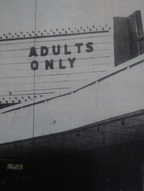
In late 1972, the venerable Trenton Theater would change hands. New owner Lawrence Moore of Ferndale signed an operating license on December 18 to continue operations as they had been doing. A further agreement signed by Moore on January 10, 1973 assured that family-fare films would continue playing the bill. The first few weeks fell comfortably under this routine, but a sudden jolt would be felt around the community on January 29, 1973. This was when the marquee would now read, “Adults Only,” as it would become the first of the local movie houses to show X-rated films.
The city’s response in protest was immediate. Officials felt betrayed, as they felt the 1972 agreement they signed with Moore would guarantee the X-rated fare would not air at the theater. The pact was made verbally as well as in writing, accompanied by a $10,000 bond, a gesture of goodwill, from Moore himself.
Theater worker George Koates would vouch for the facility, claiming the movies shown were no different than from others showing in other metropolitan adult complexes. The movies, he argued, did not fall under the State and Federal definitions of “obscene,” and therefore did not violate the terms of the 1972 agreement with Trenton.
Other locations with storied pasts, such as the Harbor, Lancaster, Mel, Park, and even the venerable Wyandotte Theater would begin to cater to the more adult crowd with X-rated features headlining their bills, at a time when many houses in downtown Detroit were following suit in order to stay in business with the newer, more traditional complexes springing up in the suburbs. On the opposite end of the spectrum, drive-in theaters hit their peak at this time, with 132 operating state-wide.
Trenton’s quick actions would force the Trenton Theater to close barely a week after debuting adult fare, as their operating license was revoked due to “material misrepresentation of facts.” Bomb threats had also been phoned to the facility. Despite this, attorney Steve Taylor, representing owner Lawrence Moore, insisted the theater would continue to operate, especially since he and his client considered the revocation was handled illegally (for example, no notice of a hearing was given to discuss the procedure). In addition, Taylor stated that Moore “signed away his First Amendment rights,” by inking the 1972 deal with the city.
A trial involving projectionist Neal Brandt accused him of operating the theater without a valid city license. The case was heard by 33rd District Court Judge Gerald A. McNally; the resulting decision on February 14 was deflating for the city and its citizens. The theater would continue to operate as it had before. McNally agreed the revocation process was handled illegally: the city did not call a proper hearing, due process had not been followed, and all charges would be dropped. McNally would further state his decision had nothing to do with the level of obscenity shown in the films, cited Moore’s right to Freedom of Expression.
As McNally dropped the case, a counter-suit seeking injunction against city interference, being prepared by the theater owners against the city, was likewise dropped.
Downriver shows America how to bowl
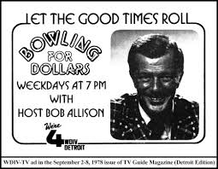
Bowling, on the other hand, was much more family-friendly than the former cinema venues, and there was no one better able to prove that than the citizens of Metro Detroit. The area had been known as the unofficial “Bowling Capital Of The World” for decades, since the old brewery-sponsored teams made Detroit one of the hearts (along with Chicago) of bowling activity. More BPAA-registered bowlers came from the Detroit area than any other place in the world. Yet Detroit did not have a bowling show to call its own, other than perhaps the occasional event produced by the Professional Bowlers Association. This would change in a big way by 1973.
Many metropolitan areas across the nation were starting their own “Bowling For Dollars” shows, where temporary lanes would be constructed inside various television studios. The competition factor would be eliminated, as bowlers were bowling individually for prizes. The Detroit area attempted the telecasts, at first to no avail – or ratings.
Channel 4’s next resort was to tap into a local radio show host’s talents, to see if he could keep the program from being canceled. Bob Allison, host of the “Ask Your Neighbor” radio show, was initially reluctant to make the venture into television; he was comfortable being a radio voice without a face. Once management piqued his interest (and he campaigned for listener approval on his radio show), he made the journey to Claster Productions (the producers of the popular Romper Room series), who were producing the individual telecasts: they crowned the Baltimore production as the best of its class.
Allison was not impressed with Baltimore’s output, as he felt too much time was spent on introductions, and not enough of it on the bowling itself. He told Claster Productions to allow him to try a different production method, which he guaranteed would be the industry standard within a year of its re-release. Given the go-ahead, Allison went to Allen Park’s Thunderbowl Lanes, whose Arena section was built for productions of this stature. We’ll produce the show, Allison told the proprietor, and people will end up “know(ing) your place.”
Being the first Bowling For Dollars series to eminate from an actual bowling center, with introductions shortened and the main focus turned to the actual bowling, Detroit’s Downriver version did become the standard to which all future productions would adhere to. Bowling For Dollars would become the highest-rated local television show ever produced, and landed Thunderbowl Lanes among the best-known and highest-ranked bowling centers in the country.
Grosse Ile faces development issue
In early 1973, tentative plans had been made by Grosse Ile officials to consider a bid for an 878-unit apartment complex to occupy an 88-acre area near the Macomb Street business district. This would send alarm bells ringing among many island residents.
On April 8, more than sixty residents gathered at Grosse Ile Golf & Country Club to reactivate the Active Island Defenders (AID), a neighborhood watchdog which had begun fighting unnecessary development concerns in 1957. Driving their anger was the proposed number of 1,300 multiple housing units being erected over a two-year period east of Meridian Road, while a similiar project near Grosse Ile Municipal Airport would have developed 43 acres with 232 apartment units.
The following night (April 9), at the bi-monthly meeting of the Township Board, 103 residents would be in attendance to voice their disapproval of the main (Macomb Street) project submitted by Kaufman and Broad Homes of Southfield. Grosse Ile Supervisor DeWitt (Dewey) Henry stated the island community was at a “crossroads” regarding increased development. Nine houses were added in 1971, but the number would increase to 44 in 1972. This was much too fast for the community.
Instances such as these would figure in Grosse Ile’s future history, showing that decisions against unnecessary building, as well as care for natural areas, would help define their expanding leadership role in their conservation plans in today’s modern times.
Trenton Theater downs the curtain
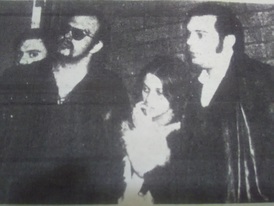
Shortly after 33rd District Judge Gerald McNally had ruled in favor of Trenton Theater owner Lawrence Moore and projectionist Neal Brandt (at left) for the right to show adult-oriented films, the city of Trenton passed a new ordinance governing provisions for defining pornography and obsecnity as it applied to the city.
This was given a further boost by the Federal Government who, on June 22, 1973, issued an important proclamation giving individual cities the ability to decide for themselves what movies, books, or other media they (themselves) considered immoral.
Their rulings, therefore, would rank over state statutes. At this time, Michigan still did not legally define what the terms meant, or to what degree.
On that same day, the theater would also close voluntarily, as it was implied the ownership wanted to “lay low” for awhile. Reopening in September 1973, they would be shut down again that same day. Owner Moore and new projectionist Charles Holt would be brought before Judge McNally, resulting in a $2,500 personal recognizance bond for each. There were talks at this juncture of Moore voluntarily surrendering his operation license.
The saga would finally end on September 21, 1973. Moore would act on his informal verbal promise and sign away his rights to the Trenton Theater, and promptly remove the “adults only” sign on the marquee. A September 25th court trial date to be overseen by Judge McNally would therefore be canceled. Trenton Mayor Isadore Mulias agreed with passing on the need for trial, stating it would save the city time and money, given the facility was already closed.
Rockwood pushes back on I-75 project
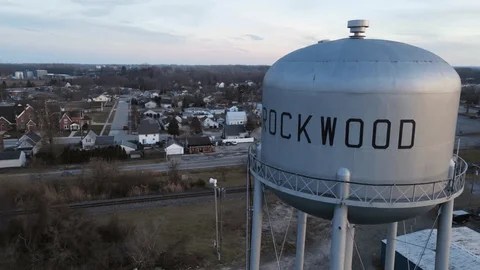
Barely eight years after Interstate 75 was constructed in the southern Downriver area, reconstruction to allow for widening of the freeway (from two lanes to three), as well as a new interchange for Huron River Drive was taking longer than anticipated.
A September meeting of the city council directed city attorney Richard Smiertka to mail letters to state officials letting them know of their concerns, which included excessive dust, noise, and re-routed automobiles.
Fears centered around possible accidents involving bicyclists choosing to travel underneath the Huron River Drive viaduct instead of across it. In fact, a three-car collision on August 28 had killed two brothers from Huntington Woods. The letter-writing was suggested by D.C. Bowen, supervisor of the reconstruction project, claiming it would be the most effective way for the contractors to get the message.
Rockwood police chief Bernard Herzog weighed in, mentioning the 45 MPH construction zone mandate was rarely enforced, and the zone itself was not long enough to assure adequate safety. Further, the State Police had been reluctant to patrol the area for unspecified reasons. The project would also be threatened with another possible extensive delay, as news of a possible equipment operator strike was made known.
Gibraltar attempts final annexation
To date, the last bid to annex nearby lands was made by the city of Gibraltar in September, 1973, as they desired to capture a portion of Brownstown Township; namely, the Fort Street / Vreeland Road area. This bid would be initially denied by the State Boundary Commission due to a technical error in the plat description, but mentioned they would accept a revised version of this proposal. City Attorney Michael Russell would be authorized by city council to “hand-carry, if necessary,” such a revised petition to Lansing.
 downriverhistory.blog