The local drive-in theaters
Downriver had, at one time or another, their choice of five outdoor drive-in movie theaters to visit for a truly unique experience, especially during winter months. The drive-in theater itself was patented by Richard Hollingshead in 1933 in Camden, New Jersey, marketed as a safe alternative to the general cinema.
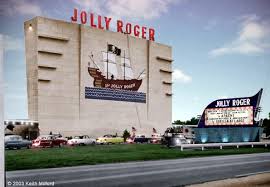
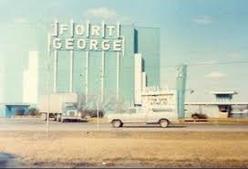
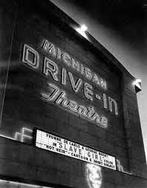
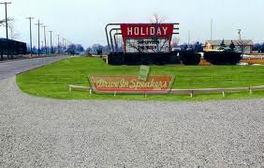
According to AI, the in-car speakers were added as a feature in 1941. The drive-ins Golden Age appears to be the 1950s, when there were over 4,000 locations around the country. Trends began to change in the 1960s as the theaters changed content to B-movies, Westerns, and other bill of fare not considered mainstream. Nearly disappearing altogether in the 1980s; by 2020 the idea was resurrected as a way to revisit history while also avoiding crowds of people during the Covid-19 pandemic.
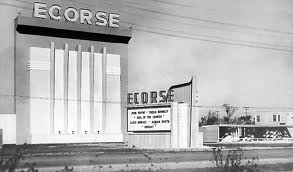
The Ecorse (1951-1989), Fort George (1950-1990), Holiday (1956-1986), Jolly Roger (1954-1990) and Michigan (1948-1984) were the places to be in the days before the modern multi-plex. The Ecorse was famed for being destroyed during the Derecho (Green Storm) of July 16, 1980, but was rebuilt.
Wyandotte’s trio of theaters
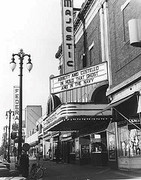
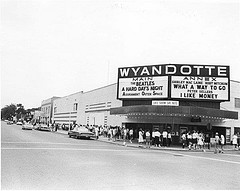
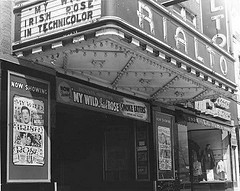
The Majestic, Rialto and Wyandotte Theaters anchored the downtown Wyandotte area in the first part of the twentieth century. Not much is known of the running history of the Majestic. The Rialto is known to have survived into the early 1950s. At that time, it was converted for use by “Bible and Christian Books,” making it a religious theater which closed for the final time on or about August, 1956.
The Wyandotte has the most interesting history, as it was billed as the first theater in the country with multiple screens. According to the publication Boxoffice Magazine, the theater was opened with one screen in 1938, with a capacity of 1,500. Not until the August 16, 1941 edition of Boxoffice was there a mention of a duplex screen in the works, as materials had been ordered from the National Theater (supply) Company.
A further Boxoffice publication, dated January 10, 1942, stated that the section known as the “Annex” opened New Years Day, 1942. The original idea was to show a double-feature in the main section, with one feature and short subjects (Laurel & Hardy, Three Stooges, etc.) in the Annex. However, this was not initially the way management worked out the arrangement. They would show the exact same pictures on both screens, but at staggered times; this way, more people could see the same two features on any given day.
Wyandotte Theater’s original run ran aground in the 1970s, as it entered an era of adult fare which, fortunately, passed rather quickly. It reopened as a general theater in the early 1980s. This second run lasted about 25 years until the business ultimately closed. In the early 2000s, it was hoped the property, which had been acquired by the Trillium Center for the Performing Arts, could make use of in-kind donations to reopen as a live performance venue, but funding evaporated after the events of September 11, 2001. It would meet the wrecking ball in 2007, and the property remains vacant.
Junior League World Series, Taylor
In 1981, the first year of the Junior League World Series (JLWS), only the four regional championship teams from the United States made the journey to Taylor’s Heritage Park. Boardman, Ohio, won the first Junior League world championship, besting teams from Richmond, Virginia; Gloucester County, New Jersey; and Bassett, California.
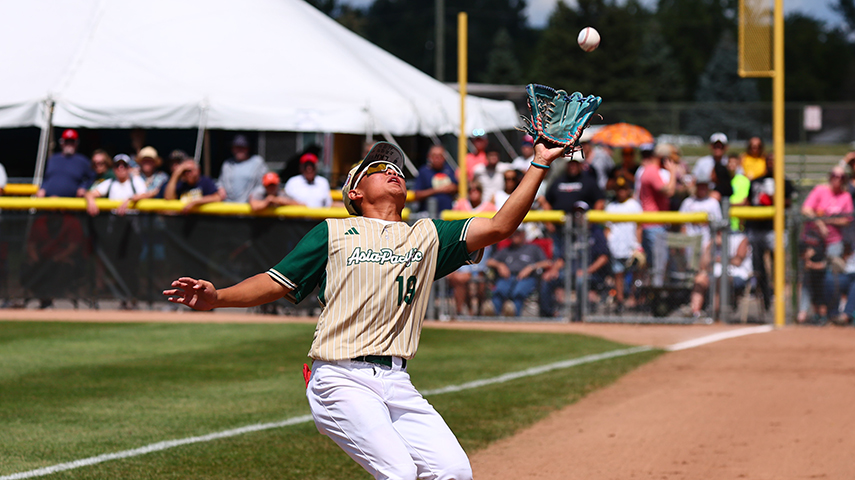
In 1999, Little league spun a separate Junior League division off from the Senior League division, which included 13 and 14 year old players. The ten regional champions are divided into two pools (USA and International). The two best teams from each pool advance to the semi-
finals, to determine the US champion and the International champion. The semi-final winners play for the championship. All matches are double elimination games.
The current defending champions of the 2025 event are Asia-Pacific. For more JLWS information, including a list of past champions, visit the Little League website.
Wyandotte Independence Day parade
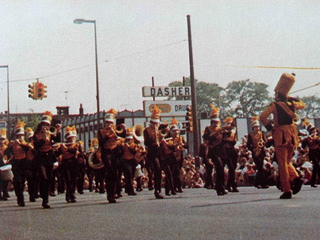
This coming July 4th will mark Wyandotte’s 89th version of the annual Independence Day parade which is one of Michigan’s longest-running, as well as one of its largest.
Known for showcasing a vast variety of musical groups from Michigan as well as Canada, numerous politicians have also walked Biddle, from former Michigan Governor James Blanchard, to future President George H.W. Bush.
The picture at left is from the Bicentennial Parade of 1976.
Southgate Heritage Days parade
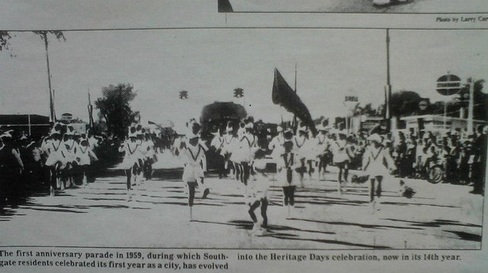
The photo to the left shows the first version of Southgate’s Heritage Days Parade in 1959, the city’s first full year after incorporation. Shown here is the intersection of Eureka and Trenton Roads.
Since then, the festivities have expanded and is a Memorial Weekend staple, ranking alongside the numerous other parades.
Lincoln Park Bandshell / Fantasyland
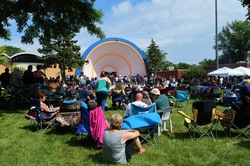
Formally known as the Kennedy Memorial Park Band Shell, it was built in the 1950s as one of Downriver’s most acoustically correct venues.
Through most of the 2000s it had been inactive for musical uses; Lincoln Park would end up advertising the bandshell on Patronicity, a site closely resembling GoFundMe. Its hoped-for $10,000 goal was reached within an unprecedented three days. Renovations were completed in the summer of 2015.
Many Christmas display traditions may have been created by the former J.L. Hudson company at its flagship downtown Detroit store, but Downriver would come up with a gem of its own: the Lincoln Park Christmas Fantasyland, which first opened its doors to the public in time for the 1964 holiday season. Fantasyland, sponsored by the Lincoln Park Chamber of Commerce, is an annual Christmas display that brings happiness and joy to people of all ages.
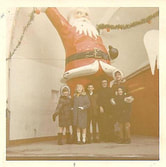
The unidentified photo at right dates from the 1960s, when it was held outdoors at the bandshell.
“Sunday! Sunday!” at Detroit Dragway
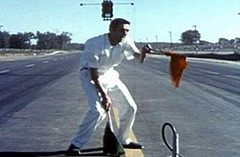
With perhaps the three most famous words ever uttered among Downriver sports enthusiasts, “Sunday! Sunday! Sunday!” would rock the area from the Detroit Dragway on Sibley Road from 1959 to 1998. It was apparently very obvious that racing was huge in the area, as the Dragway hosted the U.S. Nationals in 1959 and 1960 – its first two years of operation.
Opened and operated by Gil Kohn and promoted by Ben Christ, the two men would dream up the “Sunday” advertising campaign which would last for decades. It highest purse was $40,000 set at the 1978 Summer Nationals, but the crowds (averaging 30,000 on a good night) – and even the drivers – may have told you they were in it for the fun and action, as well as the money.
On summer nights when the wind blew gently from the south, the engines could be heard roaring as far north as Lincoln Park. Between the Detroit Dragway and Flat Rock Speedway, racing enthusiasts’ needs were very well met.
Crowds began to thin and conditions began to deteriorate in the 1980s. By 1991, average turnout struggled to hit 500. Tastes may have changed in the next generations, but management was sticking to their guns and planning a million-dollar overhaul of the course in 1994. By that time, however, new residences had sprung up to the track’s south and west, and the new residents did not agree with the Dragway’s continued operation… in much the same way new residents disliked the noise from the Indian City Radio Control club site one mile north. The track closed in 1998; on its site now are a series of logistics and warehouse companies comprising the Brownstown Business Center.
Golfing was aplenty Downriver
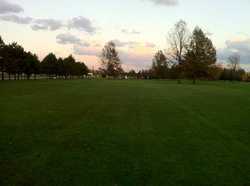
If one does not count municipally-owned golf courses (with Taylor running two of them), the former Sultana Golf Course in Brownstown, shown to the left and located at Pennsylvania & Racho Roads, was one of two courses open to the general public; the other being Tall Oaks course in Romulus.
According to AI, Sultana operated from 1959-2015. The area is still vacant and generally allowed to grow in a wild state.
Tall Oaks’ 18-hole regulation course in Romulus was located on Wahrman Road north of Eureka, and was probably the most forested of Downriver’s golf courses (with the possible exception of Woodside Meadows, located further south). The course was popular with locals & airport visitors. It opened by the early 1960s as Martin Hills Golf Club, and also as Wyndwicke Country Club prior to its expansion to 18 holes in the late 1960s.
The course – and Wahrman Road itself – would vanish by 2000-2001 as Wayne County purchased all lands nearby for the expansion of Detroit Metro Airport. The western-most runway now runs in the area of the former course.
Lang (Lange) Waterpark
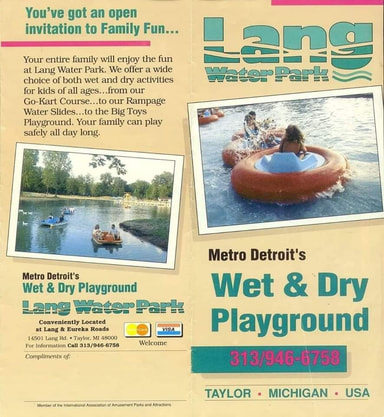
The earliest history of this water park, located between Northline and Eureka Roads off Lange Road, is shrouded in mystery. However, the city of Taylor did purchase the land from an unknown owner in 1975 for a sum of $184,600. The area was then known as Lange-Superior Park. By the beginning of 1976 (approximate), public hearings were being scheduled by city authorities as to what new attractions the park would host. The land, prior to the 1975 purchase, was mostly wooded, vacant land.
Funding for the restoration was at least partially guaranteed by a previous bond order passed by voters in 1970. Taylor was hoping for matching funds by the state’s Bureau of Outdoor Recreation in order to begin the process, which was expected to be completed in three phases.
Phase One would involve grading the land with the limited removal of trees already there, concentrating on the south end of the park. A shelter would be built along with a concentration on “creative play areas” for children, according to then-Recreation Director Robert Gorski. Phase Two would include the construction of six tennis courts and development of the site’s northern end. Phase Three would involve creating a civic center in the park.
When completed, Lange-Superior Park would have two outdoor restroom facilities with pavilions, an ampitheater for concerts, bike and jogging paths, and outdoor playfields. According to Gorski, the theme of the park, resembling more of a passive than active facility, meant that relaxation and picnicking would be more of a focus.
According to Krysten Lange, granddaughter of former city Treasurer Walter C. Lange, the park was dedicated in his honor on October 9, 1982.
Lang Water Park was known to have closed in the early 1990s, and two paintball parks have occupied the space since that time. The most recent was Action Paintball Park, as late as the early 2020s. The park is now in the process of being made over into a BMX-style extreme sports facility, Included in the rebranding will be a pump track, skateboarding park, and an 18-hole disc golf course.
Riverview Highlands ski / tubing slope
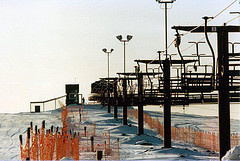
Landfill operations began in Riverview at the site just east of the WJR tower, off Grange between Sibley and King Roads, in 1968. The landfill itself, dubbed “Mount Trashmore”, did not begin to take its current shape until 1971. In a move that would make the city of Riverview nationally known for adaptive land use, it was decided to turn the northerly section of the landfill into a ski hill and, in the early years of the 1980s, did quite well.
The TV show “20/20” would air a piece in later years titled “The Town That Loves Garbage,” and this landfill re-use was one of the main drawing cards.
General conditions would doom this as a ski hill, however. The late 1980s to early 1990s were (for the most part) very mild winters, and the majority of snow on the hill had to be man-made. The main criticism was of the trash underneath the surface warming it to the point that snow would melt. The ever-increasing budget for this operation, combined with declines in attendance, led the city to drop the ski attraction and turn the hill into a sledding and tubing area, with the tubing area on the north side, closest to Sibley Road. Although a good operation, it could not duplicate the charm of the original ski hill. The north half of the landfill would be repurposed into nine holes of golf, part of Riverview’s 27-hole complex.
Wonderland Amusement Park
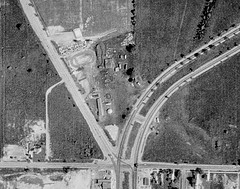
This fixed carnival midway was located where Fort, Pennsylvania and Trenton Roads converge in Southgate. A very small competitor when compared with Bob-Lo Amusement Park, Wonderland nonetheless enjoyed a great advertising campaign, prime location and vast variety of attractions & rides for a park of its size. It undoubtedly drew upon Detroit’s old Edgewater Park as a partial inspiration.
No ground-level photos exist of the overall complex; nor do definitive opening and closing dates. It may have pre-dated the opening of the Fort George Drive-In Theater by a couple of years (likely in the late 1940s).
Aerial photos show these (by the early 1950s) as the only solid developments along Fort between Leroy and Pennsylvania Roads. Various sources have opined Wonderland lasted into the 1960s, some as late as 1966. Korvette and Shopper’s Fair were immediate neighbors of the park by then, but they obviously did not help provide extra foot traffic for Wonderland. Ironically, the Korvette parking lot would hold an annual travelling carnival well into the 1980s. The Wonderland area was most likely cleared by either 1968 or 1969 to make way for the Stu Evans Lincoln-Mercury dealership.
 downriverhistory.blog