Was Lucille Ball born in Wyandotte?
This is most likely our most-asked question. Miss Ball was not born in Wyandotte, although she spent some time here briefly when she was four years old.
Lucille was born in Jamestown, New York, on August 6, 1911. The family moved several times in Ball’s initial years, from Jamestown to Anaconda, Montana, and then to Trenton, New Jersey.
Her father, Henry Durrell Ball, contracted Typhoid Fever in 1915 and did pass away on February 28, 1915, in Wyandotte. Very little is known as to how long the Ball family lived in Wyandotte; when they moved there (assumingly from Trenton) or when they would move next, although their next residence was listed as back in New York State.
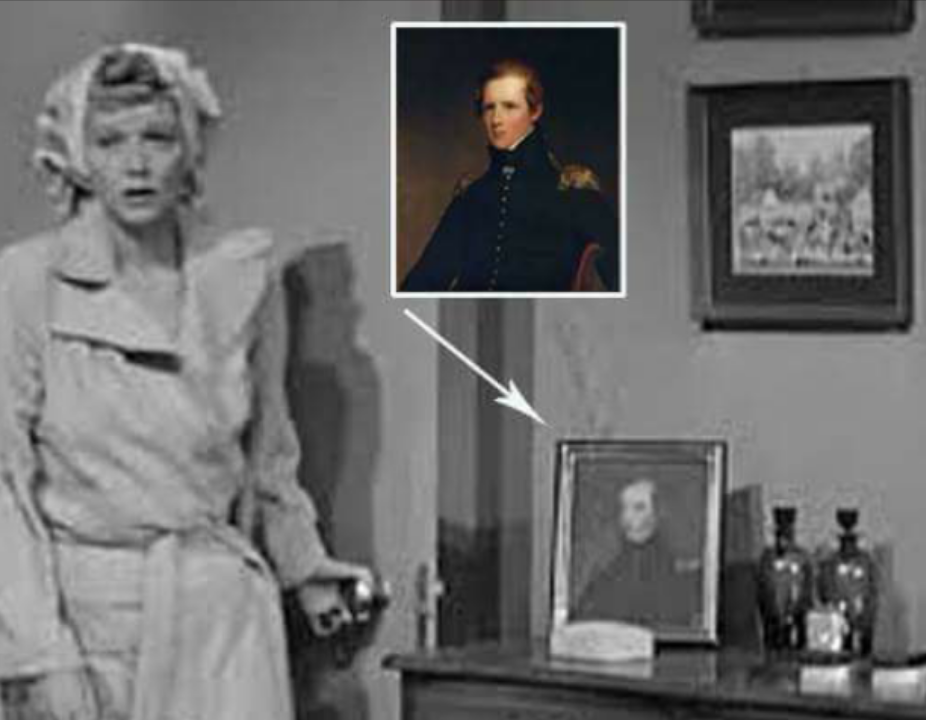
Lucille Ball did make a few visits back to her Wyandotte abode in the 1940s, shortly before skyrocketing to stardom as Lucy Ricardo in “I Love Lucy.” The show paid homage to Wyandotte’s own Major John Biddle on the set, as shown to the left.
Miss Ball’s Wyandotte house, with an address of 3738 Biddle, was demolished by the late 1950s, as part of the city’s earliest attempts at urban renewal, which focused on the south side early on.
Was Downriver in popular media?
There may be two opposing answers to this question. For the legendary Bob Seger (who has an Allen Park road named in his honor), it is a definite YES. One only need to study the lyrics to his early song “Back In ’72”, verse 2, to see the proof:
Somehow we made it to Baton Rouge
We stayed inside for a week
We weren’t in town for no Mardi Gras
So we decided to sleep
Houston, yes, was a good old guest
Tho knows how bad we wanted to play
But we got homesick for Lincoln Park
(imagine that) and then we just couldn’t stay
Tricky Dick, he played it slick
Something I was afraid he’d do
Back in ’72 , oh, ’72…
On the other end of the spectrum comes the rock band Journey, who famously made mention of South Detroit in their hit, “Don’t Stop Believin'” But did the group, led by singer Steve Perry, really refer to Downriver?
The consensus answer is NO… Mr. Perry stated that was not the intent when the lyrics for the song were written. According to an article with New York Magazine (2012), he chose the area in general because it sounded best in the song, and was not meant to refer to any particular city or location, including Downriver.
Did all Federal Department Stores burn?
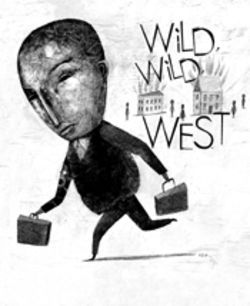
According to the source himself, the answer is no; the burnings were coincidental.
On October 31, 1977 Steven West, just three days after a story was published about him buying out inventory from the closing Robert Hall chain, purchased 25% of Federal’s common stock, thereby becoming the chief official of the company.
The acquisition was a hostile takeover, pushing the Board of Directors to try ousting West from the position. Upon being sued, West reportedly locked himself at his Federal’s office for four hours.
The resulting court trial would clear West of any wrongdoing in March, 1978. Later that year, however, several Federal stores burned. West denied involvement and suggested that he take a lie-detector test to show that neither he nor company officers were involved. No evidence exists on whether the test was taken, but West would not be charged in those circumstances.
The two Federal stores Downriver (and one in East Dearborn) were not victimized: the Wyandotte location became City Hall for the next 40-plus years, while the Southgate store became Service Merchandise by 1978, lasting for the next 25-plus years. Incidentally, the last remaining stores in the Detroit area would be renamed “Derals” (knocking off the “F” and “E”).
Has Downriver birthed national chains?
We can lay claim to at least one: Hungry Howie’s pizza, located on northbound Telegraph in Taylor, was first established in 1973.
Is Elizabeth Park Wayne County’s oldest?
Yes, it is. The park, which occupies 162 acres and was formerly known as Slocum’s Island, was originally owned by area settler Giles Bryan Slocum (1808-1884).
Originally it was offered to the village of Trenton in 1918; however, when village officials realized they could not financially maintain the property, they deeded it to Wayne County by October, 1919.
Who lays claim for Southgate’s name?
This has been an on-again, off-again debate since the early 1960s, but it’s likely we have the answer at last: The Southgate city name was first.
According to Thomas Anderson, former Ecorse Township Supervisor and first mayor of Southgate, the name was put into use as early as 1953 due to a necessity requiring “legal community identity,” although the name of Ecorse Township would continue to be used for general identification. (For mailing purposes, the township was still using Wyandotte’s post office information.)
The name represented its geographical location as the southern entrance to the metro Detroit area, judged by the Ecorse Township border on the south. An initial voter referendum held in 1956 would ultimately fail to pass a proposed city charter on the first attempt, and it was about that time initial plans were being drawn up for Southgate Shopping Center, which began construction in 1957. The shopping center was therefore named for the unincorporated village, not vice-versa.
What radio station uses the towers in Lincoln Park?
Next door to the Meijer in Lincoln Park (Dix-Toledo & Emmons) are three rows of directional radio towers which can be seen from I-75 for miles in each direction. Although four of the transmitters (closest to Dix-Toledo) were removed in the 1980s to make room for the original Super K-Mart Downriver, the remaining three rows of towers are still utilized as part of WLQV-AM 1500, a Detroit Christian Talk station.
 downriverhistory.blog