Champions! Taylor North wins LLWS

Cheers and congratulations were the order of the day on August 29 as the Taylor North Little League baseball team brought Michigan its first Little League World Series since the 1959 team from Hamtramck.
As reported by the Detroit Free Press, Jackson Surma drove in four runs and Ethan Van Belle stuck out eight in four innings, helping the North defeat Hamilton West-Side (Ohio representative) by the count of 5-2 from Williamsport, Pennsylvania.
The celebratory handshakes came for team manager Rick Thorning and his squad after Taylor North reliever Gavin Ulin was able to squeeze out of a bases-loaded jam in the sixth and final inning.
This was the first year that Taylor, who hosts the Junior League World Series, combined their area teams to the north from three (north central, northeast and northwest) to one. They were able to enter the series action after having won district and state titles in 2021, and triumphed in the Great Lakes Regional, setting the stage for the sixteen team bracket in the LLWS. At one point, the Taylor team won 15 of 16 possible games.
Chemical spill puts Flat Rock in spotlight
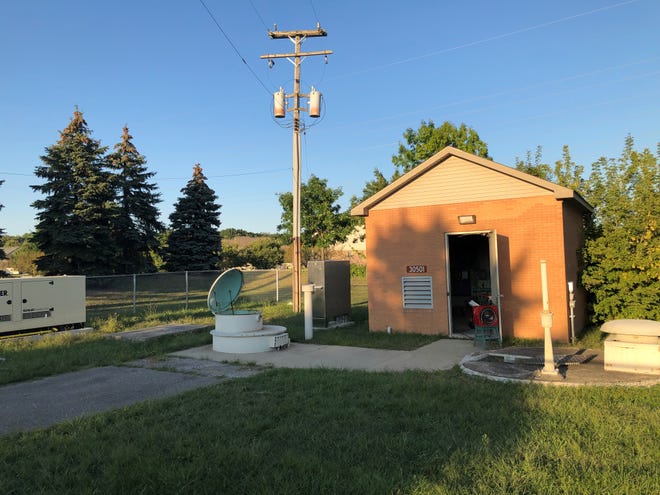
The local scene surrounding Taylor’s celebration was tempered barely 24 hours later, as a strange odor resembling benzene began leaking into various homes in the south end of Flat Rock. At the time of the initial leak, it was unknown as to the source and the root cause. Wayne County Executive Warren Evans issued a State of Emergency on September 2 after River Heights Academy and four houses had to be evacuated. Evans strongly encouraged Michigan Governor Gretchen Whitmer to declare a state-level emergency declaration in order to help aid residents nearby. There were no reported injuries at this time, nor was school in session for River Heights. The declaration from the governor would come almost immediately.
The benzene-smelling compound was eventually identified as unleaded gasoline, which leaked from an undisclosed location inside the Flat Rock Assembly Plant operated by Ford Motor Company. The evacuation orders, in the coming days, increased to an incident-high 1,100 homes as an estimated 1,400 gallons of gasoline ended up in the city’s sewer system. The majority of these homes were located south of Gibraltar Road. Ford was able to cap the egress to the city sewer by September 3, stopping any additional direct leak. At no point during the initial stages, according to research, was Flat Rock’s drinking water supply in danger.
During the height of evacuations, Evans addressed citizens’ concerns that Ford was not transparent about the goings-on, even though Evans lauded the automaker as a forward-thinker with a community-first attitude. He attributed the early “hiccups” to “personalities” and “egos involved.”
By September 10th, it was announced screenings of individual homes would begin. A constant program of flushing the sewer lines had been taking place for several days and, in an abundance of precaution, the city decided to cancel the annual Flat Rock Riverfest, held along the Huron River, for that time period.
Airport’s North Terminal renamed
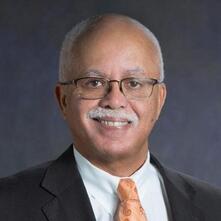
The newest terminal at Detroit Metro Airport had simply been named the North Terminal since its inception, while various searches to award naming rights were conducted. Finally, in June 2021, it was voted upon unanimously by the Wayne County Airport Authority board to name the terminal after Wayne County Executive Warren Evans. He had initially been in the public eye as the county Sheriff until taking the Executive position in 2015.
Evans was chosen by the Airport Authority for addressing Wayne County’s budget deficit and helping it to produce surpluses, according to the official announcement. He also was credited for assisting during the pandemic, helping to provide $90 million in relief for small businesses and service workers.
Highlands expansion faces voters
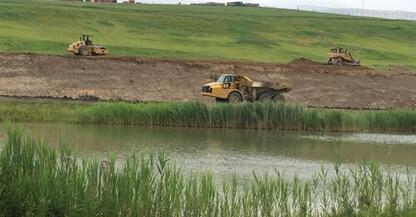
Coming off a failed initial request by Riverview in 2016, the city once again sought to approach residents in June 2021 regarding the potential expansion of the Riverview Land Preserve (the former ski hill).
Both Riverview Mayor Andrew Swift and assistant city manager Jeff Dobek – who was also manager of the land preserve – touted the benefits of the proposed expansion that would allow the facility to operate longer.
Under the proposal, the landfill would extend eastward approximately 45 acres, while promising not to expand its daily intake past the current 3,000 tons per day. Citing the fact the landfill was responsible for 25% of the city’s annual operating budget, an early closure (estimated in eight to ten years) would have ramifications involving the possibility of raising property taxes eleven mills, or slashing the funds of the Police and Fire departments.
Dobek also elaborated that renewable energy was still being processed on-site, with a gas-to-energy system providing electricity equivalent to powering 3,700 homes, which was being purchased by DTE Energy.
However, as was the case in 2016 when the issue was first brought up, residents living nearby as well as in adjacent communities had extreme reservations about allowing the landfill to continue on. Trenton, for example, had approved a resolution on May 17 disapproving (in thought) the expansion of the site without at least acknowledging environmental as well as aesthetic concerns.
One of the major issues brought up was the number of accidents and close calls at the entrance off King and Grange Roads over the years, which critics said could be alleviated by constructing a new entrance to either Sibley or Allen Road. Also suggested was an air quality monitoring system and traffic study which would help ease the impact to nearby residents.
 downriverhistory.blog