McLouth demolition stopped again by EGLE
The ringing of a new decade showed the best promise to clean up the Trenton Riverfront around the abandoned McLouth Steel plant in nearly a generation. However, as was the case with many prior efforts, this particular job would hit another environmental snag.
The Michigan Department of Environment, Great Lakes and Energy (EGLE) issued a written “Violations Notice” to Matty Moroun’s company and contractor which pertained to the ongoing clean-up of the McLouth Steel site. It stated that an investigation by EGLE staff found the following alleged violation of the National Emission Standards for Hazardous Air Pollutants (NESHPA):
The staff observed the demolition of one of the ovens at McLouth Steel. The ovens were being demolished as asbestos containing due to safety concerns if they were abated prior to demolition. During the demolition of the oven there was a large cloud of dust (visible emissions) that traveled North of the location and eventually off site. There was water being used prior and during demolition. Per the NESHPA, there can be no visible emissions if the structure is being demolished as asbestos containing.
EGLE’s Violation Notice requires “actions necessary to correct the violation” and a written response that includes an “explanation of the causes and duration of the violation; whether the violation is ongoing; a summary of actions that have been taken and are proposed to be taken to correct the violation…”
The violations were corrected rather quickly, and demolition would proceed.
Coronavirus (COVID-19) changes lives

As early as the autumn of the previous year, there were widespread fears worldwide about a possible Coronavirus pandemic emanating from China. The disease reached the United States by March, 2020.
Facing the largest pandemic known to man since the Spanish Flu of 1918, Michigan Governor Gretchen Whitmer would begin the process of safeguarding all residents. Following the first two cases being reported in Wayne County on March 10, Whitmer announced on March 12 that all schools would close until April 5. Higher levels of education would implement online teaching tools as soon as they were able.
From that time period until late May, Michigan would end up ranking third in the total amount of cases and deaths in the United States, despite all concurrent efforts to mute the spread of the Coronavirus. Throughout its evolution, it was stressed in the media to observe social distancing, which required people to stand a minimum of six feet away from each other. Additional protocol called for the frequent washing of hands, and the use of face masks whenever in a business that was open.
It was feared from the beginning that the pandemic would take a gigantic swipe out of the profits of local businesses. With nationwide employment soaring to 20% in roughly two months, unseen even during the Great Depression, some restaurants who were hit hardest began to fade from view, including Logan’s Roadhouse and Denny’s. It was unknown how other brick-and-mortar stores, particularly in malls, would survive the months-long lockdown. Through the end of May, it was still assumed that Michigan had the toughest and most strict lockdown measures still in place.
Fire damages West Mound Church
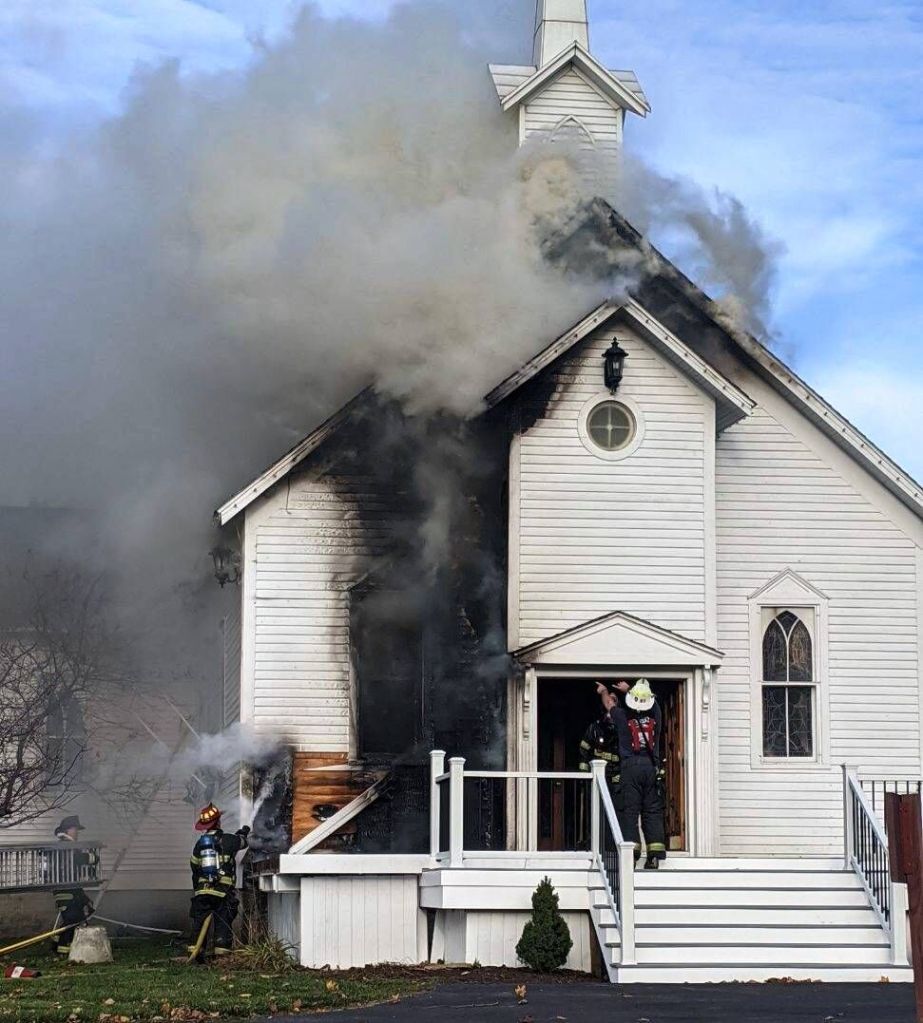
In a year marked with uncertainty and tragedy, another incident at least temporarily claimed a landmark located in Taylor.
Heritage West Mound Church, which was moved to Heritage Park in the early 1990s and remade into a wedding facility operated by Little Wedding Chapel, suffered a blaze which initiated in the lower front near the deck structure.
By the time fire crews were able to get to the scene and begin efforts to extinguish it, it had already lapped to the top of the church’s front entrance. Although contained shortly thereafter, opinions were mixed on how bad the damage was, from hopes for restoration to, as Taylor Mayor Rick Sollars put it, a potential total loss.
At that time, there was no cause as to the start of the fire, although a construction crew had been observed earlier that morning doing what was likely preventive maintenance.
Grosse Ile Free Bridge gets setback
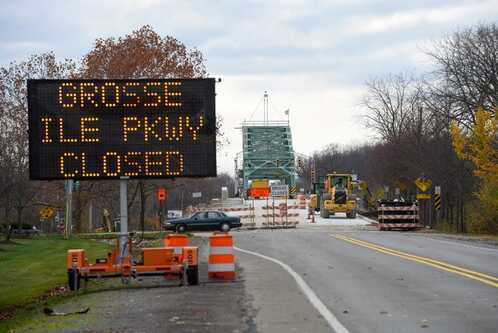
In May, officials closed the historic Grosse Ile bridge to all access for repairs, which included the replacement of the bridge viaduct spanning West River Road. Until its scheduled fall reopening, the toll bridge further north on the island would be the only means of ingress and egress. Residents, although weary from having only one route in the past, were in unison in thinking that these short term repairs would mean long term relief.
Not so fast, according to engineers in November, 2020, in declaring the bridge would be closed another year, until fall of 2021, due to the problems with the bridge’s pier system.
“You’re going to have people that are going to be inconvenienced relative to time, relative to expenses,” said Craig Pilkington, leader of Opportunity Grosse Ile, a community organization. “It affects just about every portion of island life to some degree.”
Trenton, via ordinance, aims for McLouth property
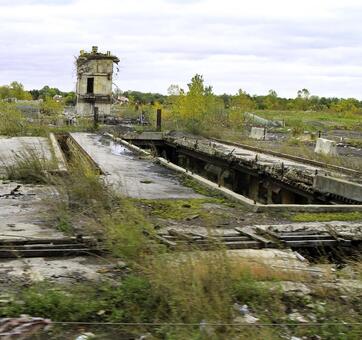
On December 7, Trenton City Council voted to approve a new zoning ordinance and map for the city’s future, focusing on the contaminated McLouth Steel site. It was a move that Trenton Mayor Steven Rzeppa said introduced the Industrial Waterfront District, which significantly reduces the permitted intensity of industrial development by eliminating the heaviest uses altogether and changes other use from “permitted by right” to “permitted subject to special conditions.”
The ordinance and map began as a discussion by a committee put together to review the city’s zoning ordinance, make necessary changes and present their work to the Planning Commission. The Waterfront Revitalization District is designed to support a transition away from the heaviest industrial uses along the city’s waterfront and permit a combination of uses which support an emerging economy more focused on innovation and connection than on extraction and fabrication.
 downriverhistory.blog